Upgrade an existing CIP station, cleaning circuits, recipes, instrumentation, and automation to achieve more repeatable hygiene results, reduce resource consumption, and improve process traceability – without necessarily replacing the entire system.

WHAT IS CIP SYSTEM MODERNIZATION
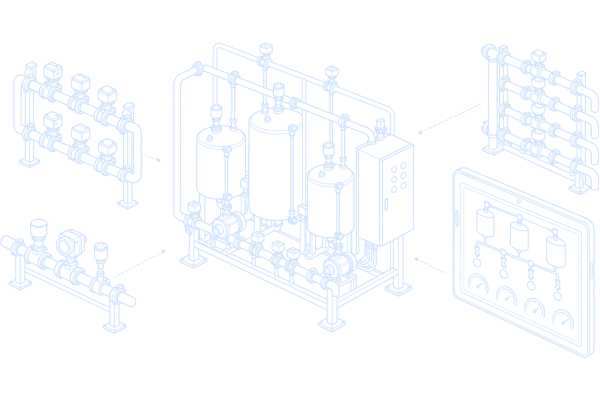
CIP System Modernization is a structured CIP system retrofit service used to assess, redesign, and upgrade a legacy CIP system without necessarily replacing it in full. The scope may include tanks, pumps, valves, pipelines, heating and dosing systems, instruments, CIP recipes, reporting, and a targeted CIP automation upgrade or CIP PLC upgrade where required. The objective is to align the existing system with current products, capacity, hygiene expectations, utility costs, automation standards, and documentation requirements.
MODERNIZATION OUTCOMES
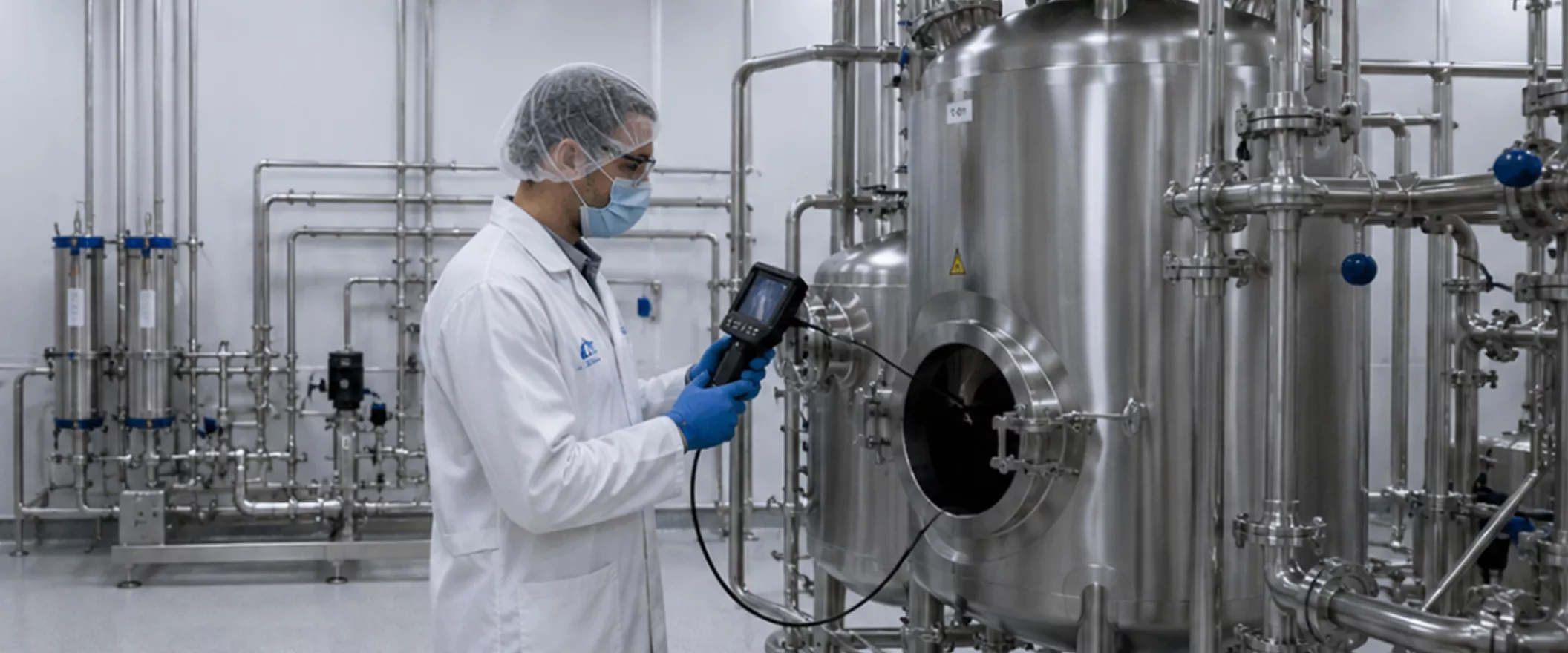
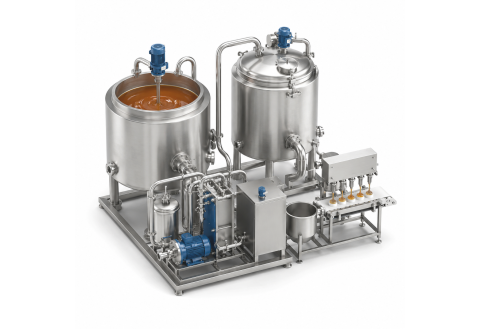
Many existing CIP systems were designed for an earlier product range, lower capacity, different washing objects, simpler allergen requirements, and less demanding automation or microbiological controls. Over time, new equipment and cleaning tasks are added while the original system architecture remains largely unchanged.The station may continue running, but cleaning becomes slower, more resource-intensive, difficult to verify, or dependent on operator experience. Modernization closes the gap between the system’s original design and the plant’s current operating reality.
WHEN THIS SERVICE IS NEEDED
01
ATP, swab, final-rinse, microbiological, shelf-life, or product results remain unstable despite a completed cleaning cycle.
02
Cycles are unnecessarily long, rinsing is timer-based, chemical recovery is limited, or water and energy use are not measured.
03
The existing CIP station was not designed for new recipes, higher-viscosity products, additional tanks, fillers, or allergen changeovers.
04
Cleaning relies on manual actions, paper records, fixed timers, or limited alarms instead of automatic measurement and traceability.
05
Long sanitation windows restrict production, delay product changeovers, or create cleaning conflicts between washing objects.
06
Current PFDs, P&IDs, recipes, technical requirements, or acceptance criteria are missing or insufficient for a modernization project.
WHAT CAN BE MODERNIZED
Modernization may cover CIP recipes and operating parameters, CIP station equipment, valves and cleaning circuits, instrumentation, automation and control, and monitoring and reporting — from targeted improvements to a complete CIP system upgrade.
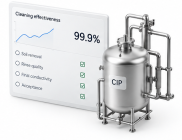
Whether the station can deliver the required flow, temperature, chemistry, pressure, and cycle sequence to every washing object.
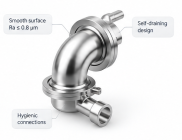
Whether piping, valves, equipment, slopes, drains, welds, seals, and connections support complete cleaning and drainage.
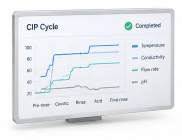
Whether critical parameters are measured and controlled rather than assumed through fixed timers or operator actions.
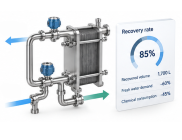
Whether rinsing and chemical phases are identified, routed, recovered, or discharged using reliable process signals.
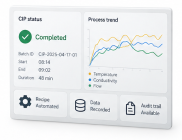
Whether recipes, alarms, interlocks, permissions, cycle records, and reports provide controlled and auditable execution.
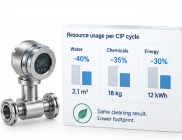
Whether water, chemicals, steam, electricity, cycle duration, and wastewater are optimised without reducing cleaning reliability.
SYSTEMS AND COMPONENTS
WHAT WE ASSESS
Review 1 — PFD, P&ID, and documentation review
Identifies missing circuits, outdated drawings, unclear project boundaries, and incorrect valve or instrument logic.
Review 2 — CIP parameter and trend review
Identifies insufficient flow, pressure, temperature, detergent concentration, poor final rinsing, incorrect phase duration, or missing alarms.
Review 3 — Hygienic design and piping assessment
Identifies dead legs, low points, poor drainability, rough welds, damaged seals, and non-cleanable valve arrangements.
Review 4 — Spray-coverage assessment
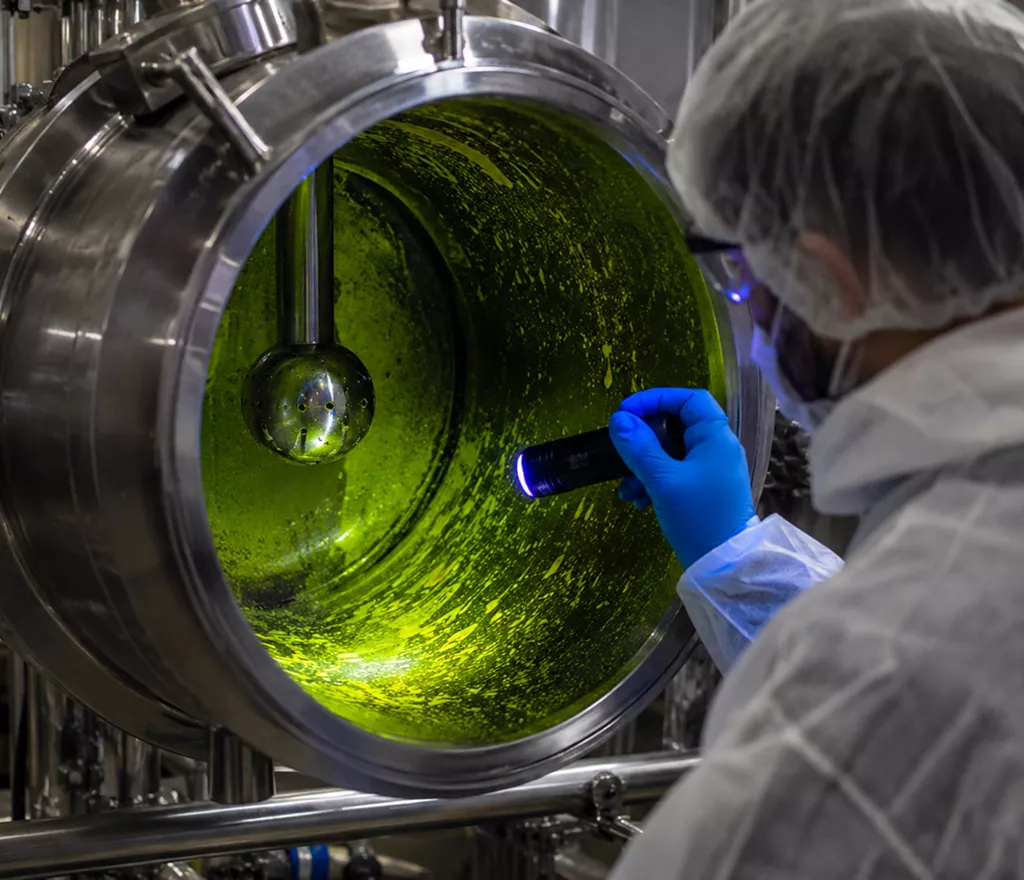
Identifies blocked, damaged, jammed, or incorrectly positioned cleaning devices and tank shadow zones.
Review 5 — Hygiene verification
ATP, swabs, allergen tests, and water testing identify residual soils, microorganisms, allergen carry-over, or unsuitable rinse quality.
Review 6 — Resource and recovery assessment
Identifies excessive water, chemicals, steam, energy, wastewater, and missed recovery opportunities.
HOW THE SERVICE IS DELIVERED
01
Collect existing PFDs, P&IDs, layouts, washing-object lists, CIP recipes, utility data, process logs, alarms, chemical consumption, microbiological history, and project objectives.
02
Map the actual CIP station, cleaning circuits, tanks, pipelines, valves, instruments, drains, tie-ins, sampling points, and hard-to-clean zones.
03
Review hygienic design, drainability, flow paths, dead-leg risks, valve logic, instrumentation, heating and dosing capacity, return control, and automation gaps.
04
Analyse cleaning phases, setpoints, flow, pressure, temperature, conductivity, turbidity, rinse quality, chemical use, water consumption, and energy demand.
05
Prepare the target system concept, PFD and P&ID mark-ups, equipment and instrument requirements, automation expectations, utility needs, tender basis, and phased implementation plan.
06
Support supplier clarification, detailed design review, installation, FAT, SAT, recipe fine-tuning, commissioning, and CIP Validation.
WHAT YOU GET
Where required, the modernization concept can be developed into a controlled engineering package for procurement and implementation. This gives potential suppliers one common basis and reduces different assumptions, hidden exclusions, and late design changes. Note: In many cases, the most effective approach is a phased upgrade focused on the actual performance gaps. Recipe optimisation, additional sensors, improved return detection, valve or pump replacement, recovery improvements, automation upgrades, and updated documentation may deliver the required result without a complete station replacement.

MAP
Verified washing objects, cleaning circuits, supply and return routes, access points, instruments, utilities, and risk areas
DRR
Hygienic, process, automation, documentation, capacity, and resource-efficiency gaps ranked by location, impact, and priority.
CONC
Recommended upgrade scope for tanks, pumps, valves, instruments, heating, dosing, recovery, automation, recipes, and reporting.
ENG
Updated or new PFDs and P&IDs, 3D layout or tie-in views, technical task, RFQ/RFP basis, acceptance criteria, and supplier-clarification list.
REC
Target phases, setpoints, alarms, sampling points, hold/release logic, and verification requirements.
CONCL
Product-safety risks, expected resource improvements, CAPA priorities, validation scope, and recommended next implementation steps.
STANDARDS AND METHODS IN USE
The exact engineering and verification basis depends on the plant, process, market, and modernization scope.
WHY CIP EXPERTS
01

We understand CIP processes in detail, know how hygiene issues develop, and apply the right methods to investigate them.
02

We assess the relationship between equipment, cleaning parameters, automation, and microbiological results.
03

Every conclusion is supported by measurements, technical inspections, and laboratory testing.
04

We provide a clear action plan to correct identified deviations and achieve the required result.
FAQ
Does modernization always mean replacing the whole CIP station?
No. A phased upgrade may include recipe improvements, additional sensors, valve or pump replacement, recovery tanks, automation changes, and updated documentation without replacing the entire station.
Can CIP cycle time be reduced without compromising cleaning quality?
Yes, but only after risk-based analysis. Time may be reduced by improving flow and temperature control, return monitoring, conductivity or turbidity logic, and end-point detection instead of relying on fixed timers.
How does modernization improve microbiological safety?
It reduces uncontrolled process variables, improves hygienic routing and drainability, adds measurement and traceability, and verifies results using appropriate inspection and hygiene-testing methods.
Can modernization be performed in stages?
Yes. The plan can prioritise critical hygiene risks first and divide mechanical, automation, recipe, recovery, and reporting upgrades into separate phases.
Can you prepare documentation for a supplier tender?
Yes. The service may include PFDs, P&IDs, layouts, equipment and instrument requirements, automation scope, RFQ/RFP documentation, and acceptance criteria.
Do you support implementation after the assessment?
Yes. Support may include supplier clarification, design review, FAT, SAT, installation coordination, commissioning, recipe fine-tuning, and CIP Validation.
What information is required to start?
Existing PFDs and P&IDs, layouts, equipment and washing-object lists, CIP recipes, product and allergen information, utilities, chemical consumption, cycle logs, alarms, microbiological results, and project goals.
Related Pages

Tell us about your plant, your challenge, or your project —
we’ll respond within 1 business day with a relevant answer or a proposed scope.
Thank you for your request!
Our team will contact you soon to discuss your project and the next steps.
Request Sent
Thank you for contacting CIP Experts. Our manager will contact you within one business day.
