Verify hygiene after CIP cleaning with ATP bioluminescence, microbiological surface testing, allergen screening, pathogen analysis, and water sampling. The service provides objective evidence that equipment, product-contact pipelines, and surrounding hygienic zones are ready for the next production batch.
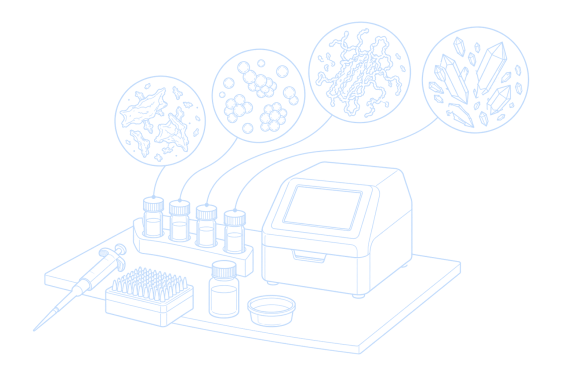

WHAT ARE LABORATORY TESTS
Laboratory tests are used in food and beverage production to verify that equipment, product-contact pipelines, and hygienic production zones are clean after CIP and suitable for the next production batch.
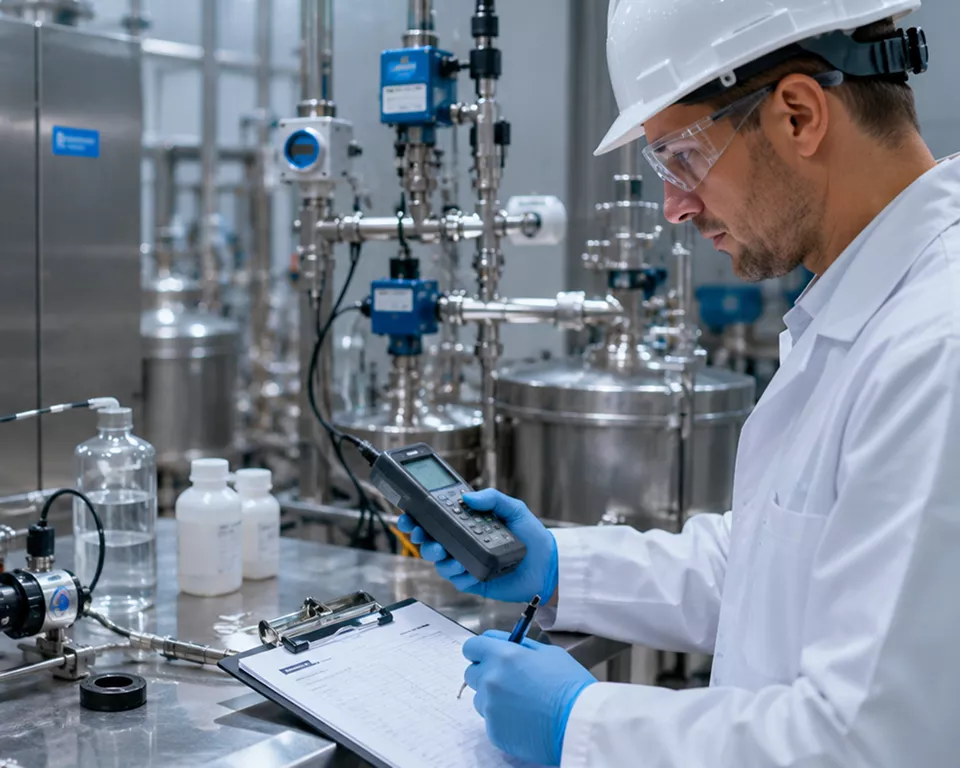
Depending on the inspection objective, CIP hygiene testing may combine ATP testing after CIP, microbiological swab testing, contact plates, sponge samples, allergen tests, pathogen analysis, and rinse water testing. These complementary methods can also support allergen cleaning validation where product changeovers require documented verification against defined acceptance criteria.
Unlike visual inspection alone, laboratory and rapid hygiene tests provide measurable evidence of cleaning and disinfection effectiveness.
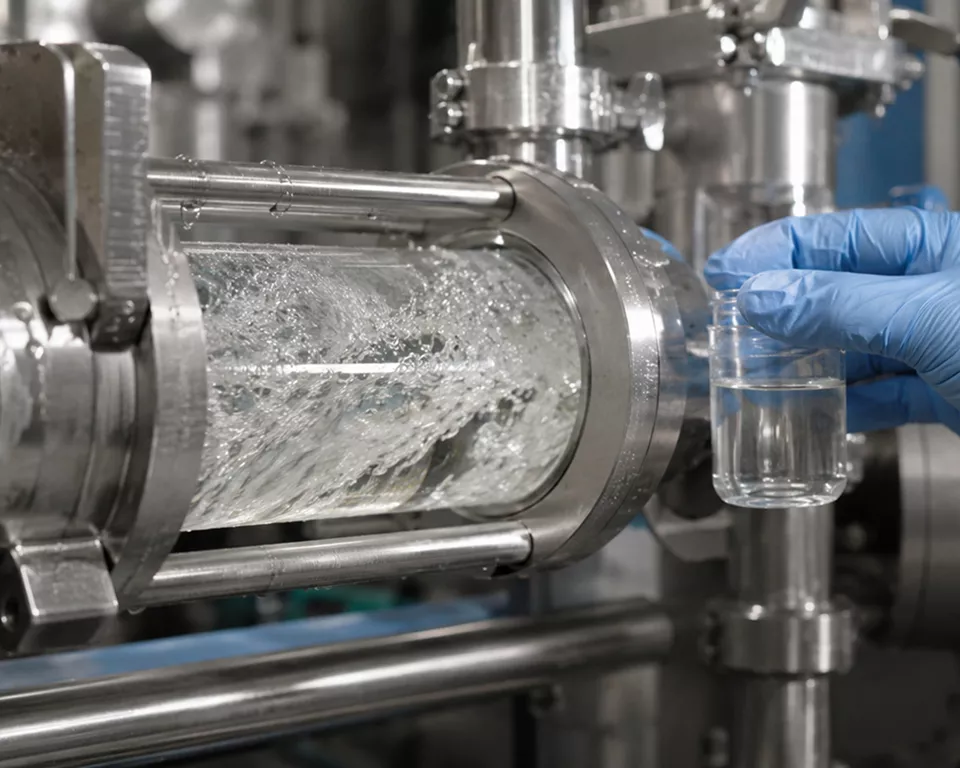
Lab Tests help confirm or reject the presence of organic residues, indicator organisms, allergens, and target pathogens such as E. coli, Salmonella spp., and Listeria monocytogenes.
Note: ATP testing does not identify a specific pathogen, and a negative ATP result does not replace microbiological verification. Allergen tests, surface cultures, pathogen methods, and water analysis must be selected according to the specific risk — reliable hygiene verification may require several complementary methods.
WHY LABORATORY TESTING MATTERS
WHEN THIS SERVICE IS NEEDED
The service is relevant whenever a plant needs objective confirmation that cleaning has produced an acceptable hygiene result. It can be used during validation of a new CIP program, after microbiological deviations, following allergen changeovers, before audits, or after maintenance work that may have recontaminated the equipment.
01
When there are signs of internal transfer between media but no visible external leak.
02
When a hidden defect may be affecting separation or process reliability.
03
Before defects develop into larger failures or unplanned shutdowns.
04
To confirm actual equipment condition before starting expensive repair work.
05
To avoid seal damage, labour cost, and extended production downtime.
WHAT THE TESTS REVEAL
Each method answers a different hygiene question. ATP indicates residual organic or cellular material, microbiological sampling measures surface flora, pathogen tests identify specific organisms, allergen tests detect residual proteins, and water analysis verifies the quality of final rinse and utility water.
Differences between the proposed design and approved URS, GMP, EHEDG, EN ISO, hygienic-design, or internal requirements.
Differences between the installed system and the approved P&ID, layout, drawings, specifications, or equipment lists.
Incorrect equipment, piping, valves, instruments, utility connections, slopes, flow directions, or hygienic installation details.
Missing certificates, calibration records, manuals, FAT/SAT evidence, approvals, or component traceability.
Incorrect valve or pump operation, alarms, interlocks, recipes, sequences, permissions, or control responses.
TYPICAL SAMPLING AREAS
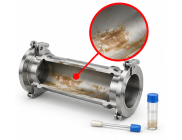
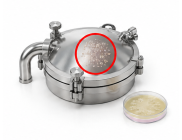
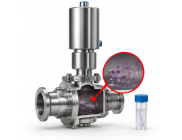
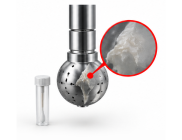
Sampling can cover direct product-contact surfaces, connected CIP circuits, open production areas, water systems, and other locations where contamination may survive, enter the process, or be transferred to the next production batch.
LABORATORY TEST OPTIONS
Method 1 — ATP Bioluminescence Testing
Surfaces are swabbed after CIP and final rinse. Results are measured in relative light units (RLU) and classified as Pass, Caution, or Fail against the approved site limits. Provides immediate feedback on organic or cellular residue levels before production restarts.
Method 2 — Microbiological Surface Testing
Sterile swabs, sponges, or contact plates are collected from product-contact and hard-to-clean zones — nozzles, valves, gaskets, tank outlets, pipe openings, bends, and dead-leg risk areas. Used to assess total viable count, coliforms, Enterobacteriaceae, yeast, and mould.
Method 3 — Pathogen Testing
Targeted testing for specified organisms using the agreed laboratory method. Confirms or excludes the presence of E. coli, Salmonella spp., Listeria monocytogenes, or other organisms defined in the site test matrix.
Method 4 — Allergen Residue Screening
Rapid allergen swabs or lateral-flow strips are used at defined product-contact points after allergen-containing production. Helps verify whether cleaning removed allergen residues to below the accepted threshold.
Method 5 — Water and Final-Rinse Testing
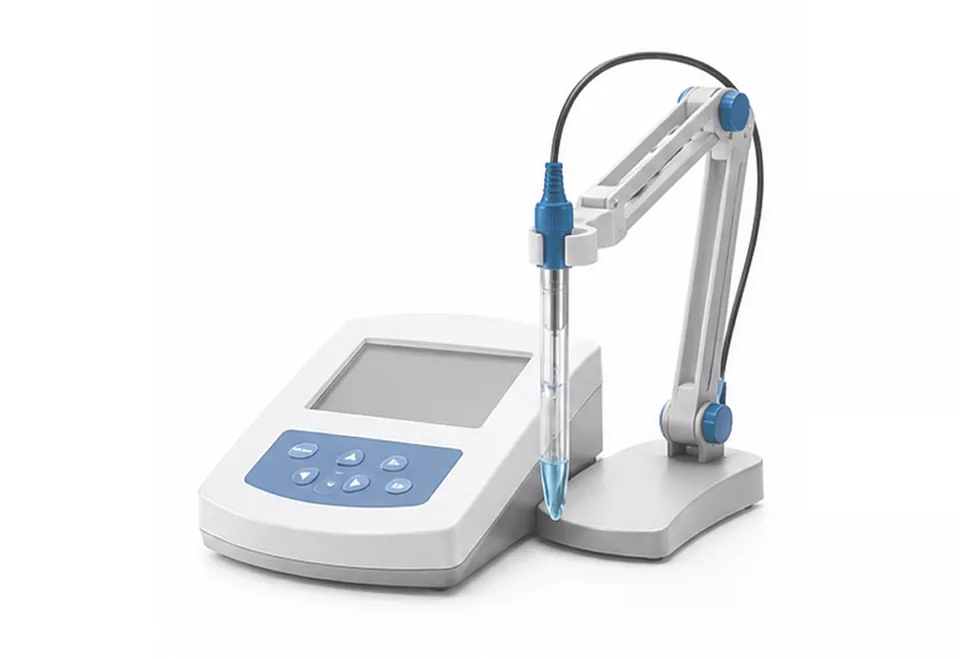
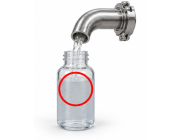
Final-rinse, process, make-up, product, or hygienic-loop water is collected aseptically. Selected parameters may include colony count, E. coli or coliforms, pathogens, pH, conductivity, or disinfectant residual.
HOW THE SERVICE IS PERFORMED
01
Define the equipment ID, product type, allergen risk, CIP program, water points, sampling locations, required tests, acceptance limits, hold/release rules, and retest logic.
02
Selected surfaces are swabbed after CIP and final rinse. Results are measured in RLU and classified as Pass, Caution, or Fail against the approved site limits.
03
Sterile swabs, sponges, or contact plates are collected from product-contact and hard-to-clean zones such as nozzles, valves, gaskets, tank outlets, pipe openings, bends, and dead-leg risk areas.
04
Rapid allergen swabs or lateral-flow strips are used at defined product-contact points after allergen-containing production.
05
Final-rinse, process, make-up, product, or hygienic-loop water is collected aseptically. Selected parameters may include colony count, E. coli/coliforms, pathogens, pH, conductivity, or disinfectant residual.
06
Results are consolidated into a report with pass/fail status, sample map, photos, trend observations, and recommendations.
WHAT YOU GET
The final result gives quality, production, maintenance, and food-safety teams a traceable record of what was tested, where samples were taken, which limits applied, and whether the inspected equipment is acceptable for production.

SM
Equipment, pipelines, tanks, valves, water points, and hygienic zones with sample IDs
PFR
ATP RLU values, microbiological results, pathogen/allergen status, and water parameters vs. agreed limits
PE
Sampling points, swab areas, allergen strips, culture plates, water samples, and visible residue zones
HC
Clear conclusion for equipment release, re-cleaning and retesting, or corrective action
RC
Practical corrective actions for CIP adjustment, gasket/valve cleaning, water-treatment review, or additional verification
STANDARDS AND METHODS IN USE
Sampling, testing, and reporting can be aligned with recognised food-safety, laboratory, water-quality, and hygienic-design requirements. The exact standards applied depend on the test matrix, market, site program, and laboratory scope.
ISO 22000:2018
ISO 22002-1:2025
ISO 22002-100:2025
ISO/IEC 17025:2017
ISO 18593:2018
ISO 4833-1 / ISO 6579-1 / ISO 11290-1
ISO 19458:2006 / ISO 6222:1999
EC 852/2004 / 21 CFR 117 / Codex
EHEDG GL 8 / GL 45 / GL 28
WHY CIP EXPERTS
01

We interpret test results in the context of cleaning parameters, equipment design, water quality, and process risk.
02

Sampling points and methods are selected according to the actual production and hygiene objective rather than using a generic test package.
03

Acceptance limits, hold/release rules, and retest logic are agreed before sampling begins.
04

The report connects failed results with potential causes and practical corrective actions for QA, production, maintenance, and CAPA teams.
FAQ
Does ATP testing replace microbiological testing?
No. ATP testing rapidly indicates organic residue or cellular material but does not identify a specific pathogen. Microbiological cultures, PCR, or other approved methods are required to confirm organisms or CFU levels.
When should samples be taken after CIP?
Normally after final rinse and draining, once safe access is available and before production restart or recontamination. The exact timing must match the validation or monitoring objective.
How are acceptance limits selected?
Limits must be agreed with the customer and aligned with product risk, process design, site procedures, applicable regulations, and the approved test matrix.
Can one test confirm that equipment is completely safe?
Not always. ATP, microbiological, pathogen, allergen, and water tests answer different questions. A combined test matrix may be required for reliable verification.
What information is needed before the visit?
Equipment list, process flow diagram, CIP program, cleaning chemicals, recent deviations, product and allergen matrix, sampling points, acceptance limits, water-point list, and available production window.
Related Pages
Explore complementary inspection, testing, and qualification services for a complete CIP validation scope.

Tell us about your plant, your challenge, or your project —
we’ll respond within 1 business day with a relevant answer or a proposed scope.
Thank you for your request!
Our team will contact you soon to discuss your project and the next steps.
Request Sent
Thank you for contacting CIP Experts. Our manager will contact you within one business day.
