Maintain the hygienic integrity of product-contact pipelines with Product Piping Inspection. The inspection reveals hidden weld defects, damaged gaskets, corrosion, product residues, and hygienic-design issues. Early detection helps reduce the risk of microbiological deviations, cross-contamination, and product loss.


WHAT IS PRODUCT PIPING INSPECTION
Clear View Inside
Product-Contact Pipelines
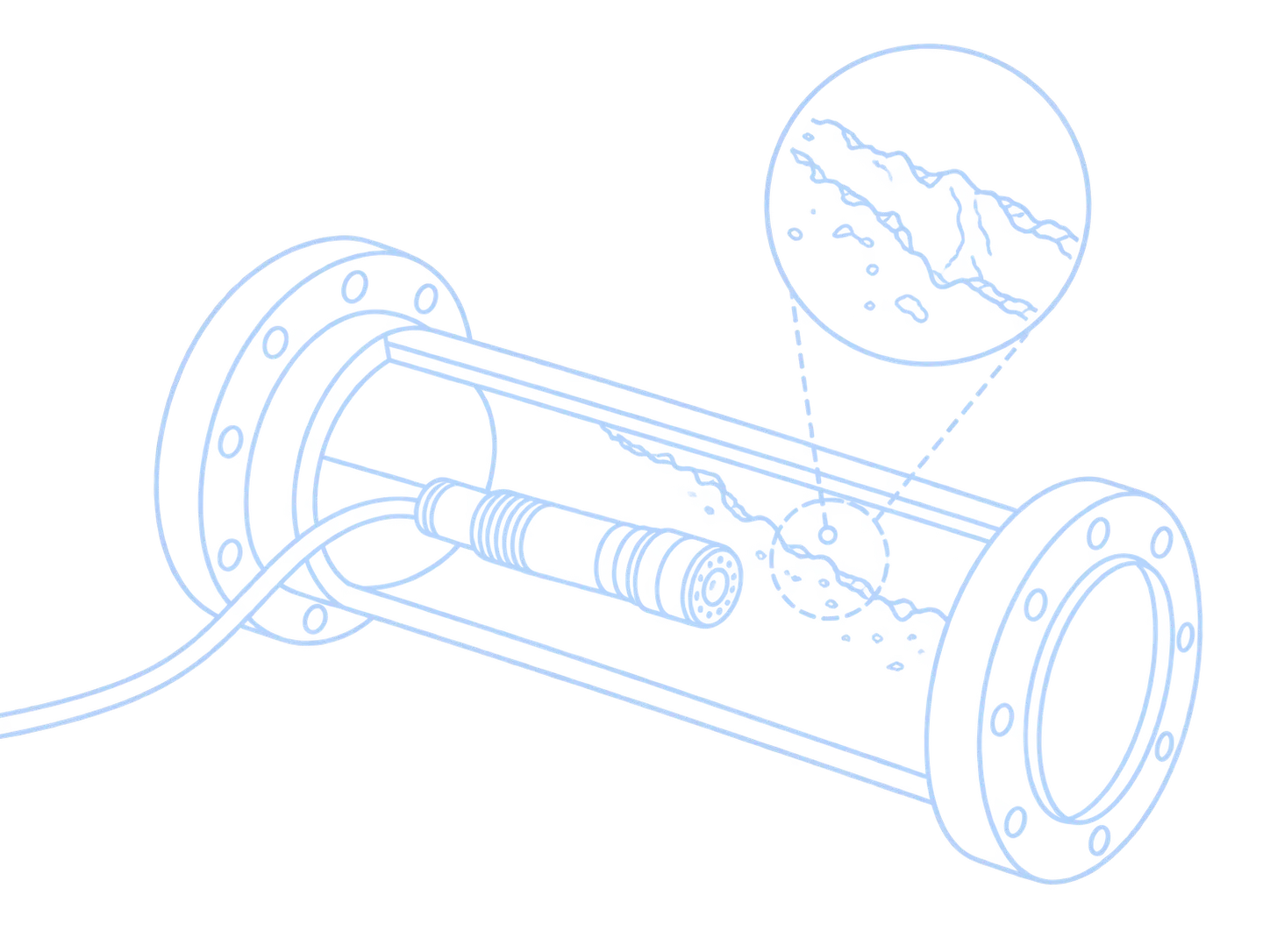
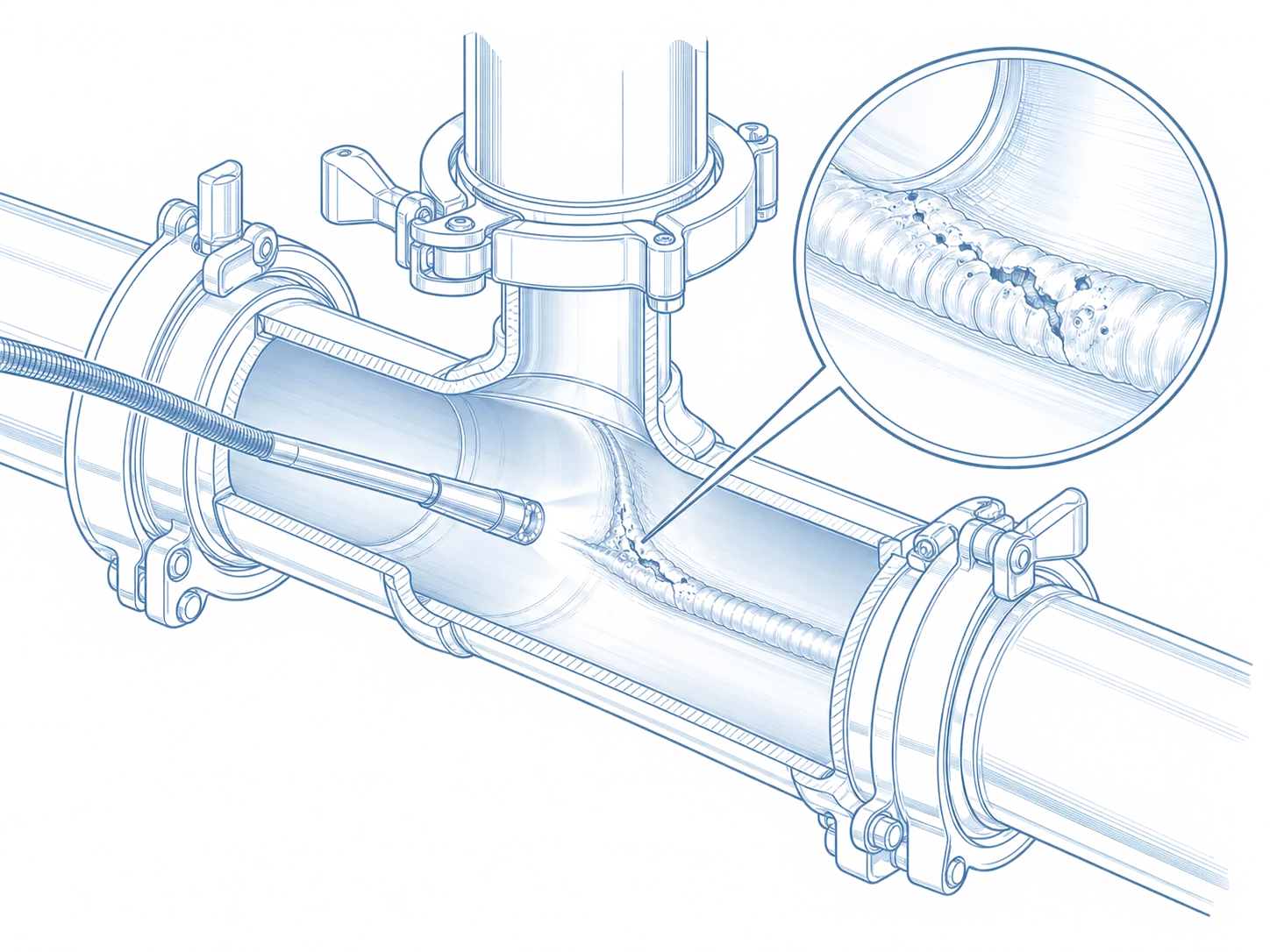
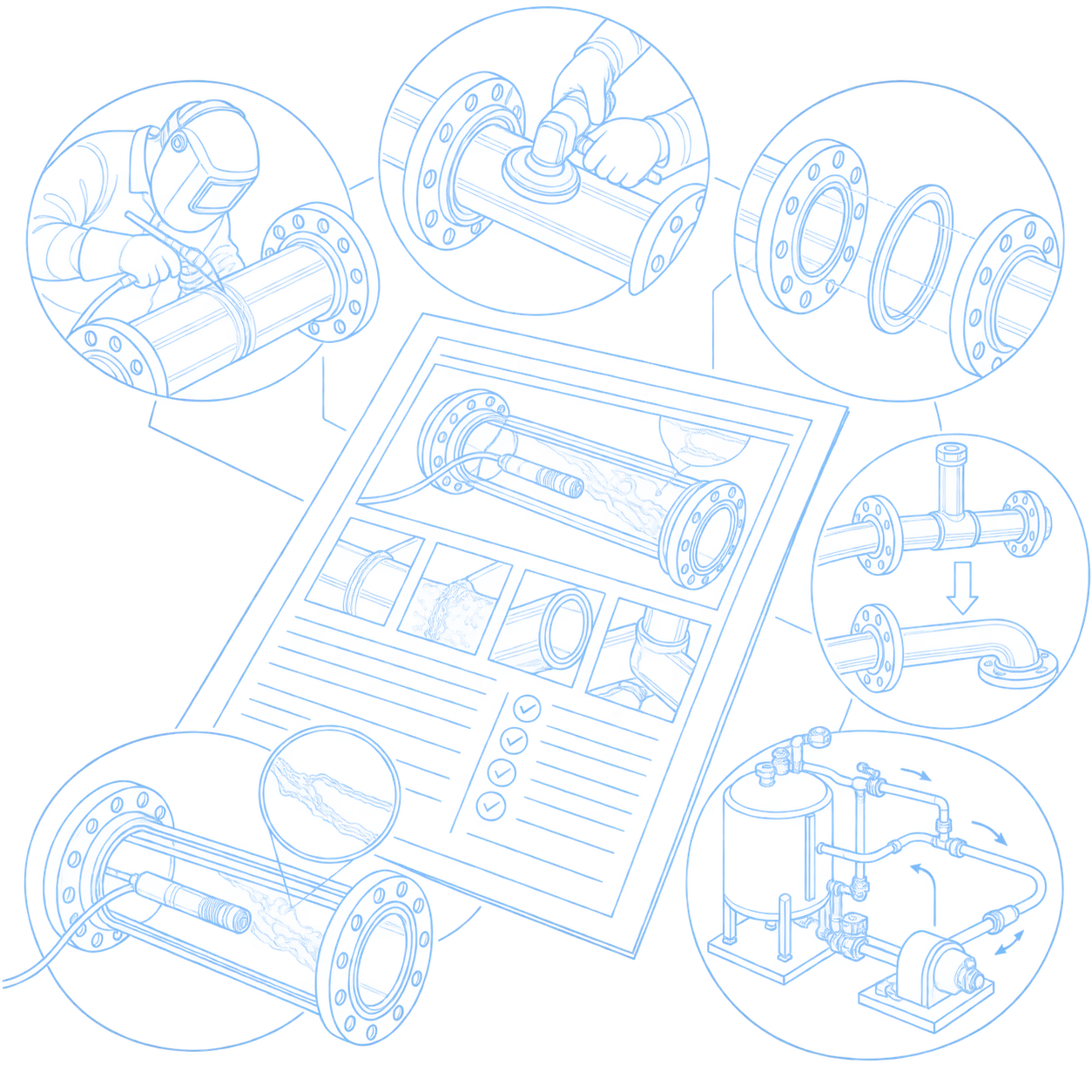
Product piping inspection is a non-destructive hygienic piping inspection of internal product-contact surfaces. A sanitary endoscope, borescope, or videoscope is introduced through available access points to examine internal welds, bends, reducers, gasket grooves, valve seats, T-pieces, and suspected dead legs. This borescope inspection provides photo or video evidence for sanitary weld inspection, defect localization, and targeted dead leg inspection where geometry requires closer review.
The inspection reveals physical defects and contamination niches that may retain product, moisture, or microorganisms despite apparently correct CIP parameters. Findings are recorded with photo or video evidence and linked to an exact line section, direction, and distance from the access point.
WHY PIPING INSPECTION MATTERS
The external condition of a pipeline does not confirm that its internal product-contact surface is hygienically suitable. Rough welds, cracks, displaced seals, corrosion, scratches, trapped residues, and poor geometry can create niches where microorganisms survive standard CIP cycles and contaminate subsequent batches. Product piping inspection helps locate these risks before they result in repeated microbiological deviations, recalls, or unplanned downtime.

Detects internal defects that can retain product and increase cross-contamination risk.

Allows visual verification through existing access points with minimal dismantling.

Provides exact locations and visual evidence for weld repair, polishing, gasket replacement, or redesign.

Directs maintenance teams to confirmed problem areas instead of dismantling large pipe sections.

Helps explain repeated positive swabs or microbiological deviations when CIP parameters appear correct.

Creates documented records for HACCP, hygienic design, food-safety, and CAPA processes.
WHEN THIS SERVICE IS NEEDED
The service is relevant whenever the internal condition of product-contact piping cannot be confirmed from outside or when hygiene results remain unstable despite apparently correct CIP execution. It is particularly valuable before commissioning, after modifications, following seal or valve failures, and during investigations into recurring microbiological deviations.
01
Verify internal welds, bends, gasket seats, and low-flow sections before the first product run.
02
Confirm that cutting, re-welding, polishing, valve replacement, or line extension has not introduced hygienic defects.
03
Investigate hidden physical causes when swabs, rinse water, or product results remain unstable despite correct time, temperature, flow, and chemistry.
04
Check for displaced seals, loose fragments, open gasket grooves, or trapped product inside the process path.
05
Provide documented visual evidence for hygienic design, cleaning verification, and corrective-action planning.
06
Assess dead legs, difficult-to-drain sections, ageing connections, and other high-risk areas before defects cause hygiene deviations or unplanned downtime.
DEFECTS WE DETECT
Videoscope inspection helps identify visible surface, assembly, geometry, and cleanliness defects inside reachable product-contact lines. Each finding is evaluated according to its potential to retain product, restrict cleaning, support microbial growth, or introduce foreign-body and cross-contamination risks.
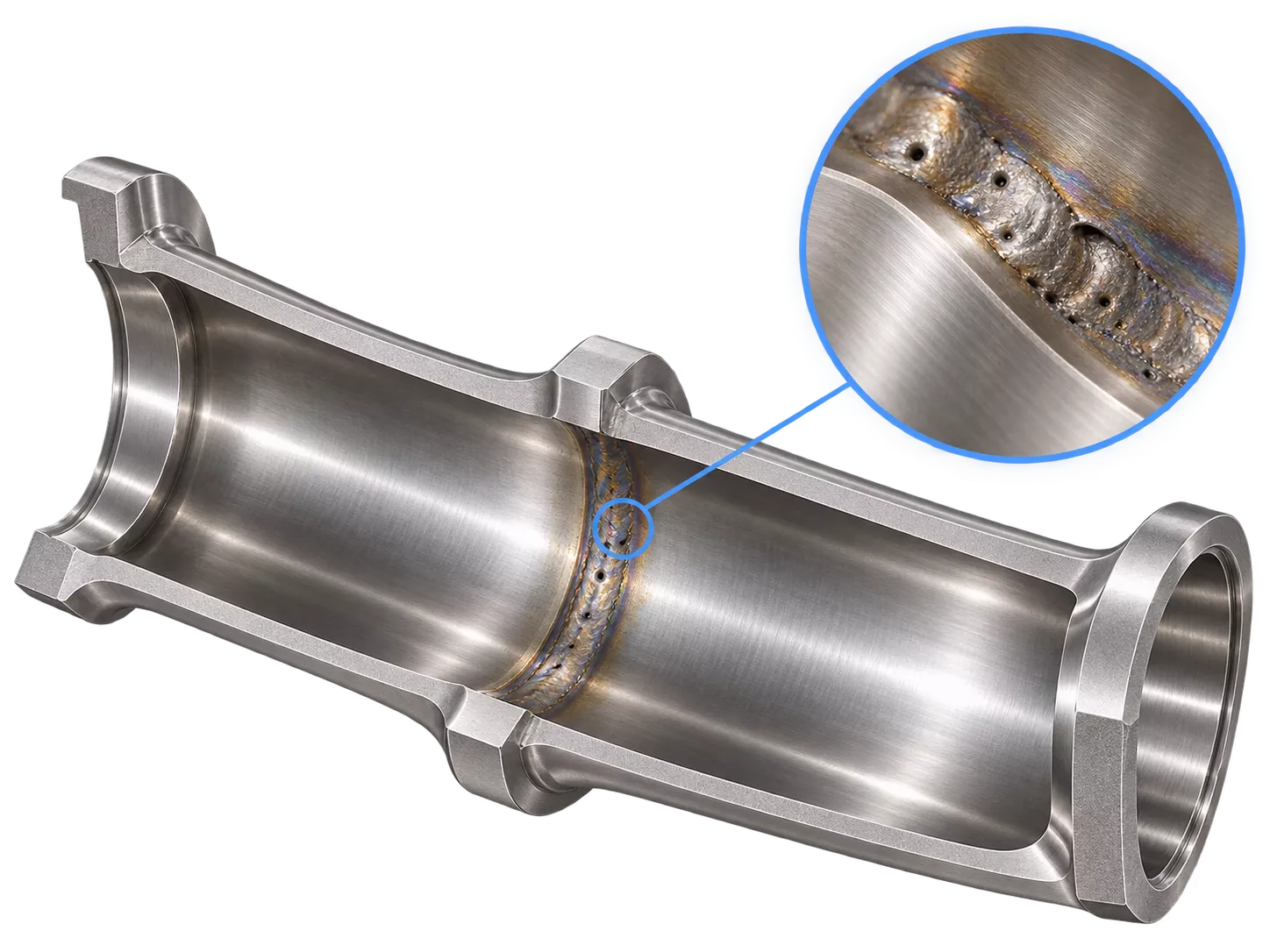
Rough seams, incomplete penetration, undercut, porosity, cracks, heat tint, and misalignment.
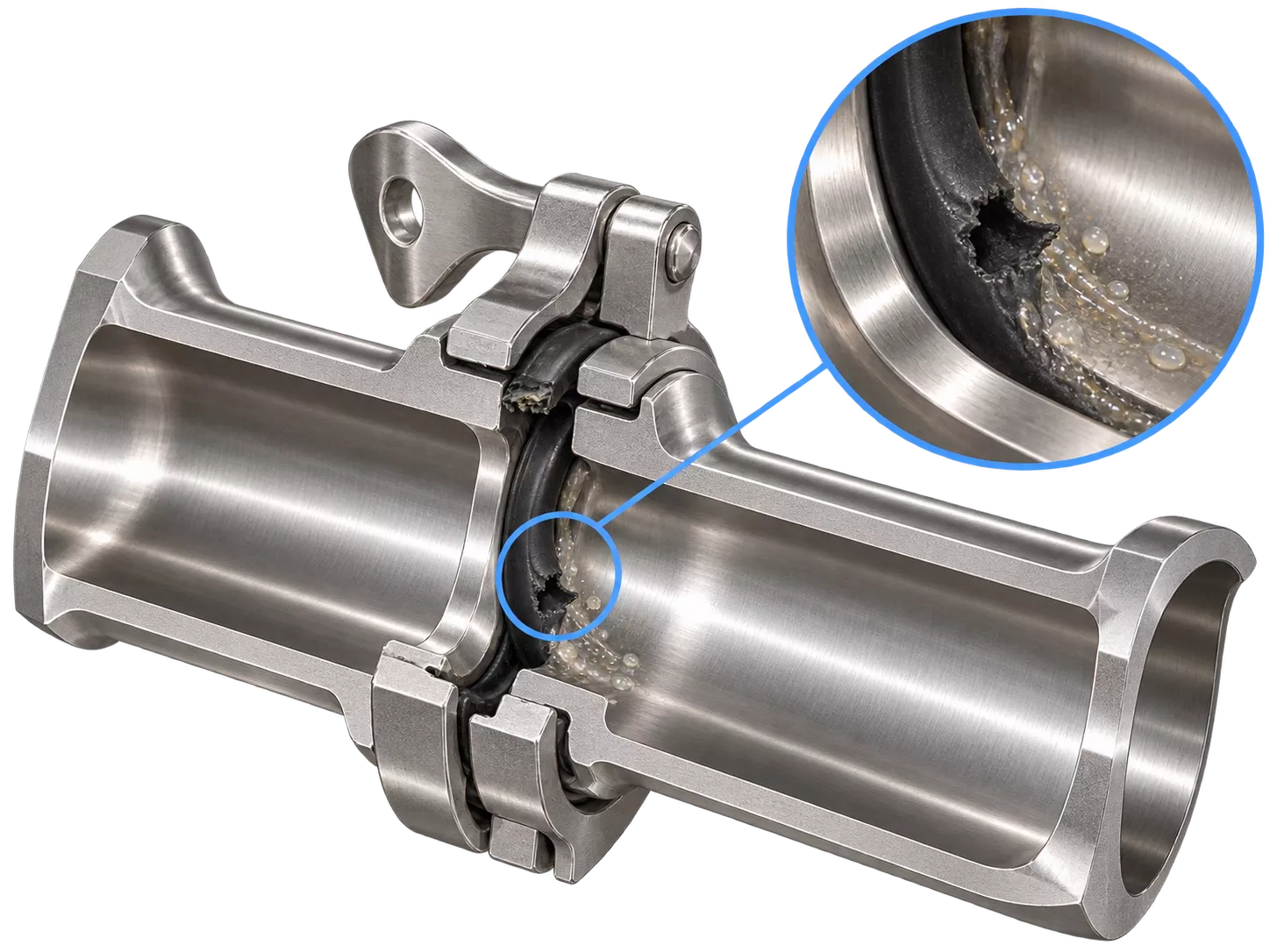
Swollen, displaced, incorrectly installed, or fragmented seals and open gasket grooves.
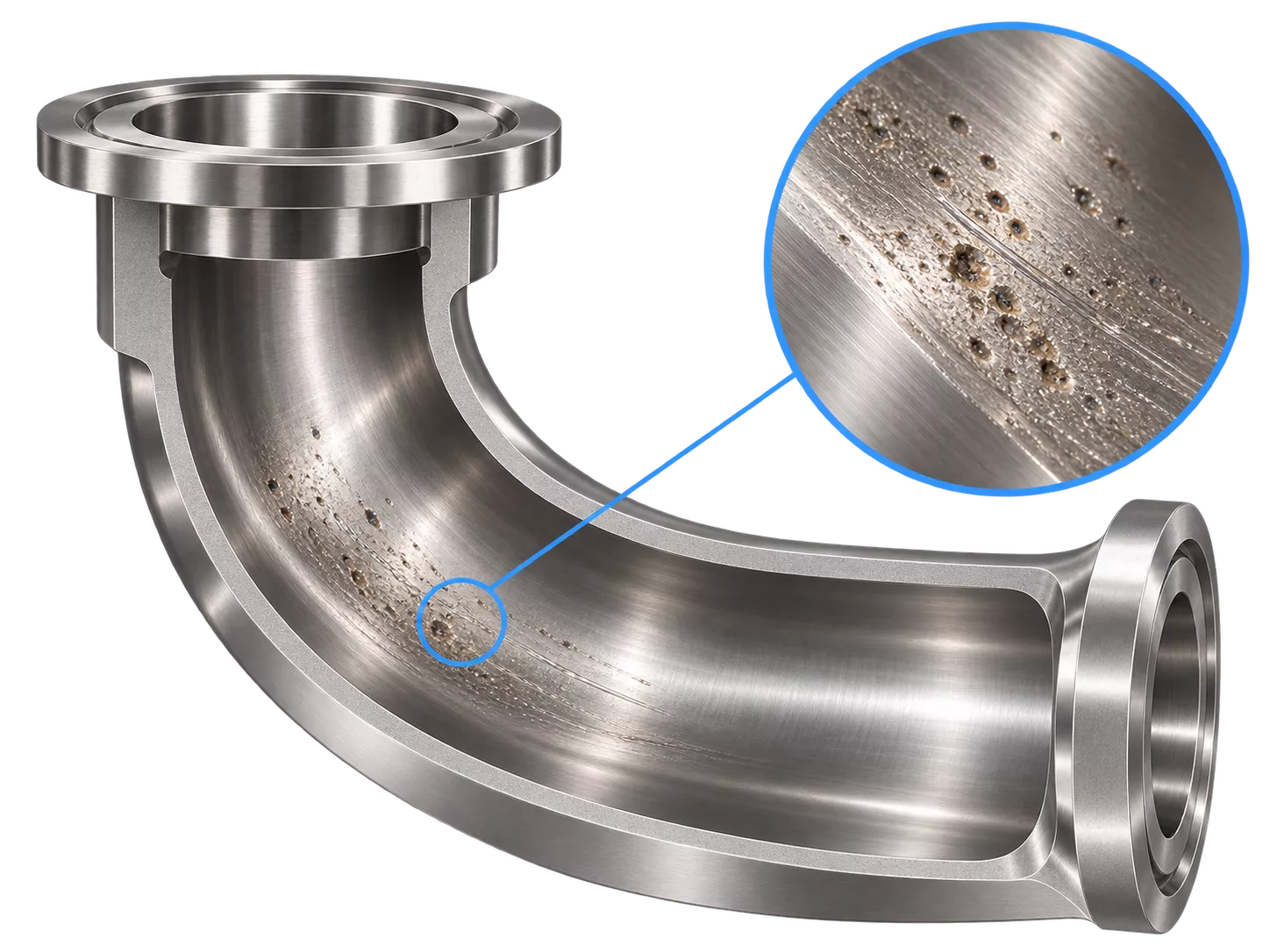
Scratches, pitting, corrosion, rough polishing marks, and mechanical damage.
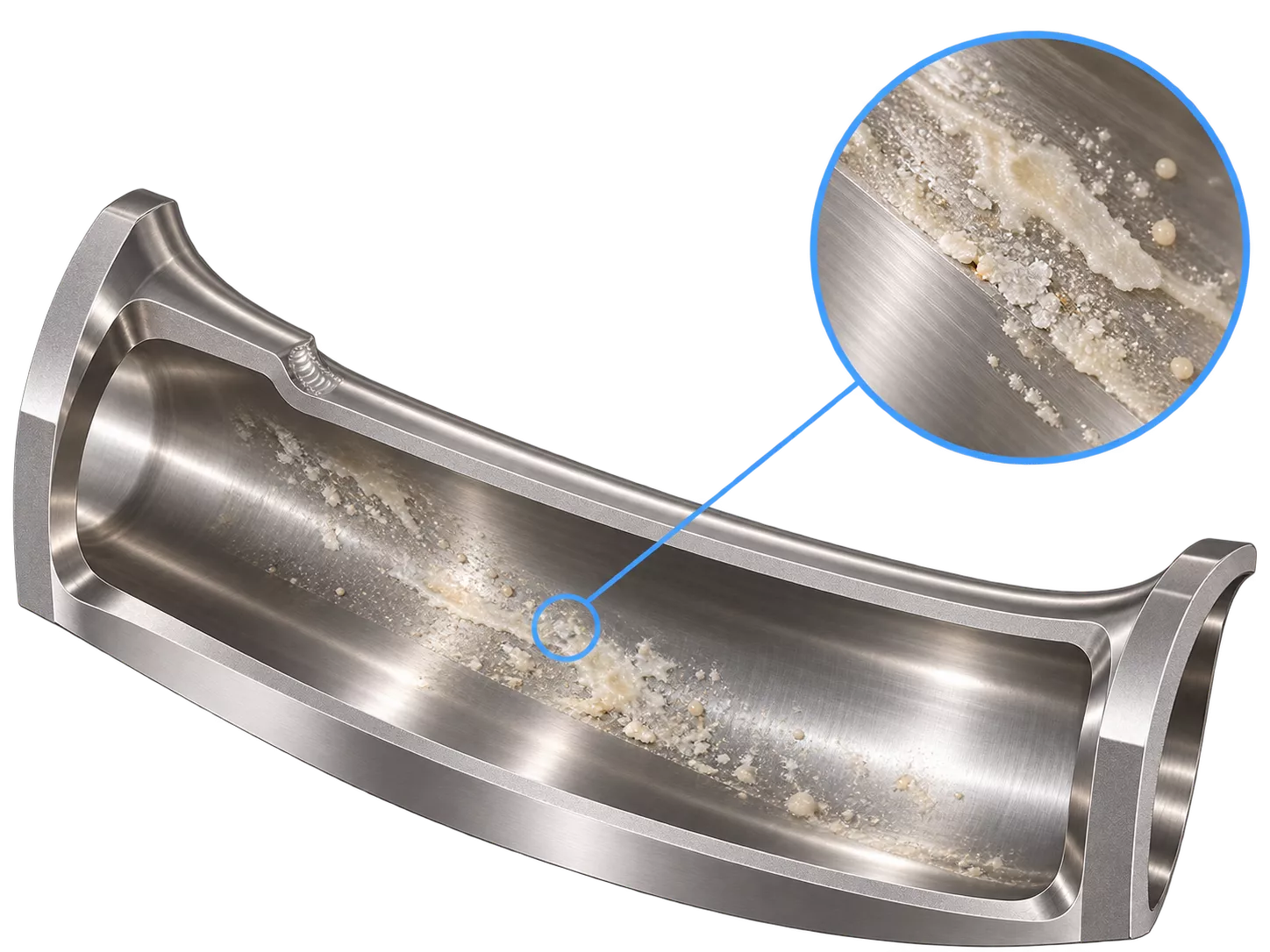
Residual product, scale, chemical deposits, soils, or foreign particles remaining after CIP.
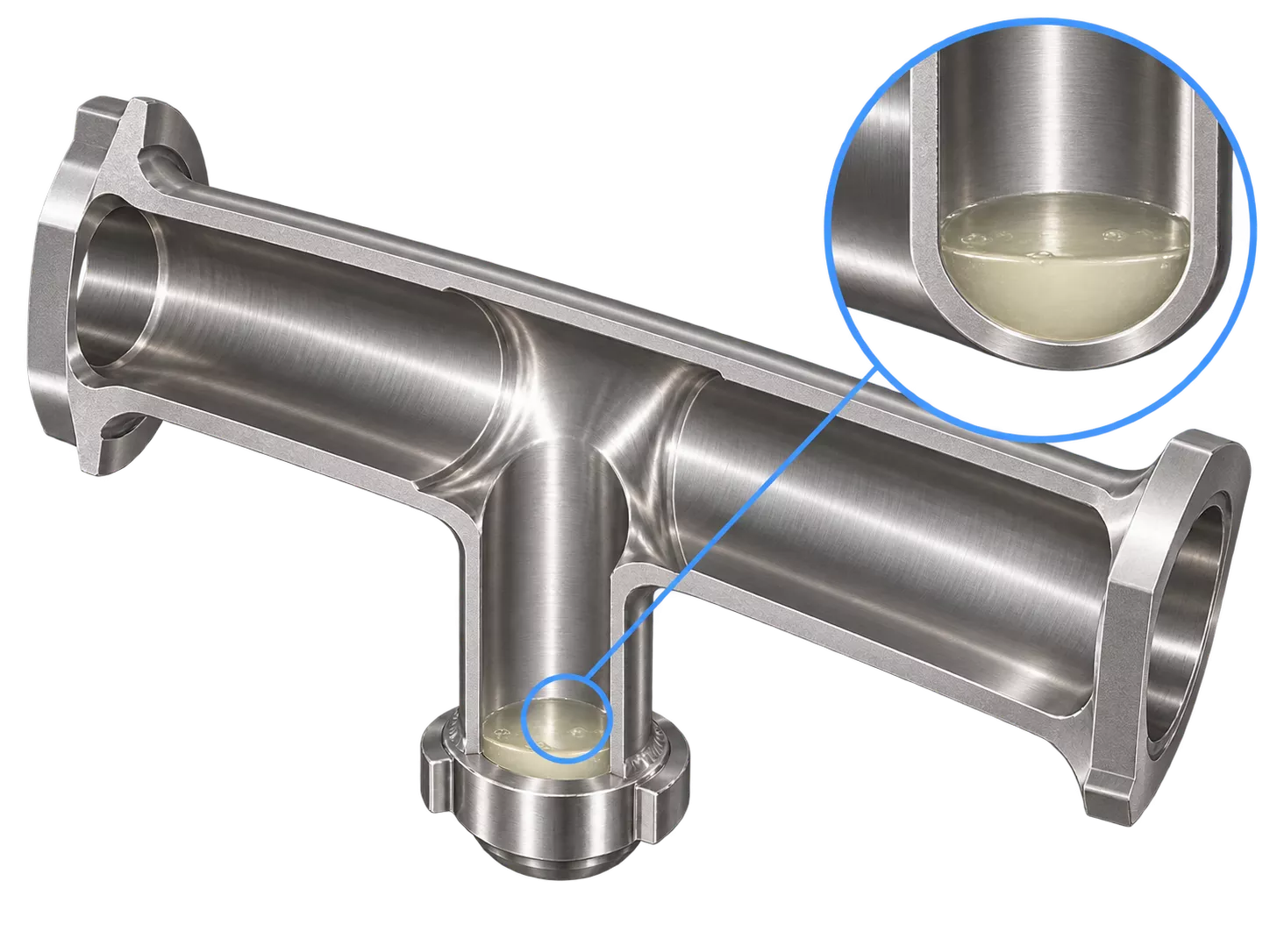
Dead legs, low points, poorly oriented reducers, stagnant sections, and trapped-liquid zones.
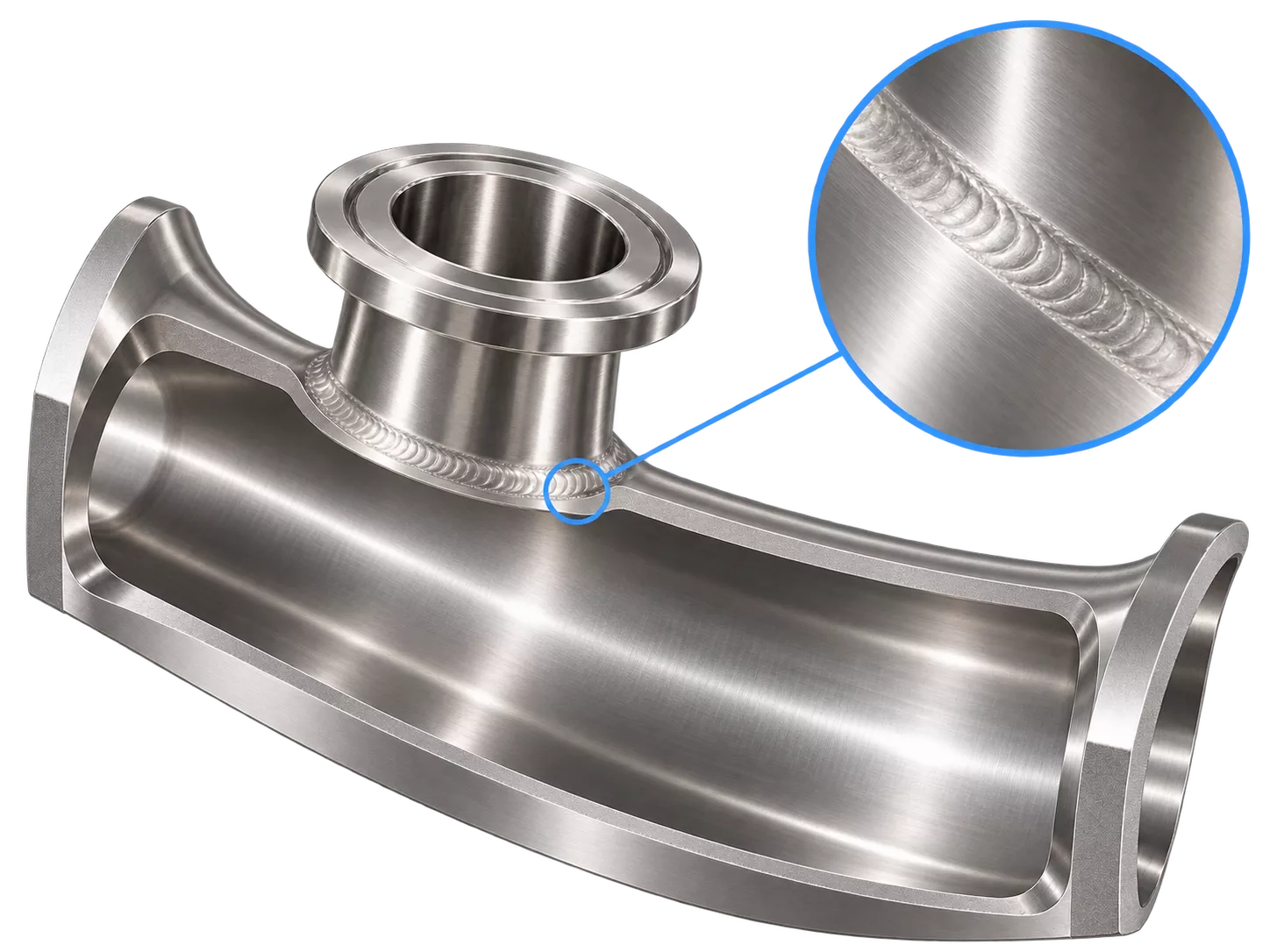
Visual confirmation that inspected product-contact areas are free from visible defects or retained residues.
TYPICAL EQUIPMENT
Product piping inspection can be applied to hygienic pipelines and connected components wherever internal surface condition, assembly quality, and drainability affect food safety and reliable CIP performance.
HOW THE INSPECTION IS PERFORMED
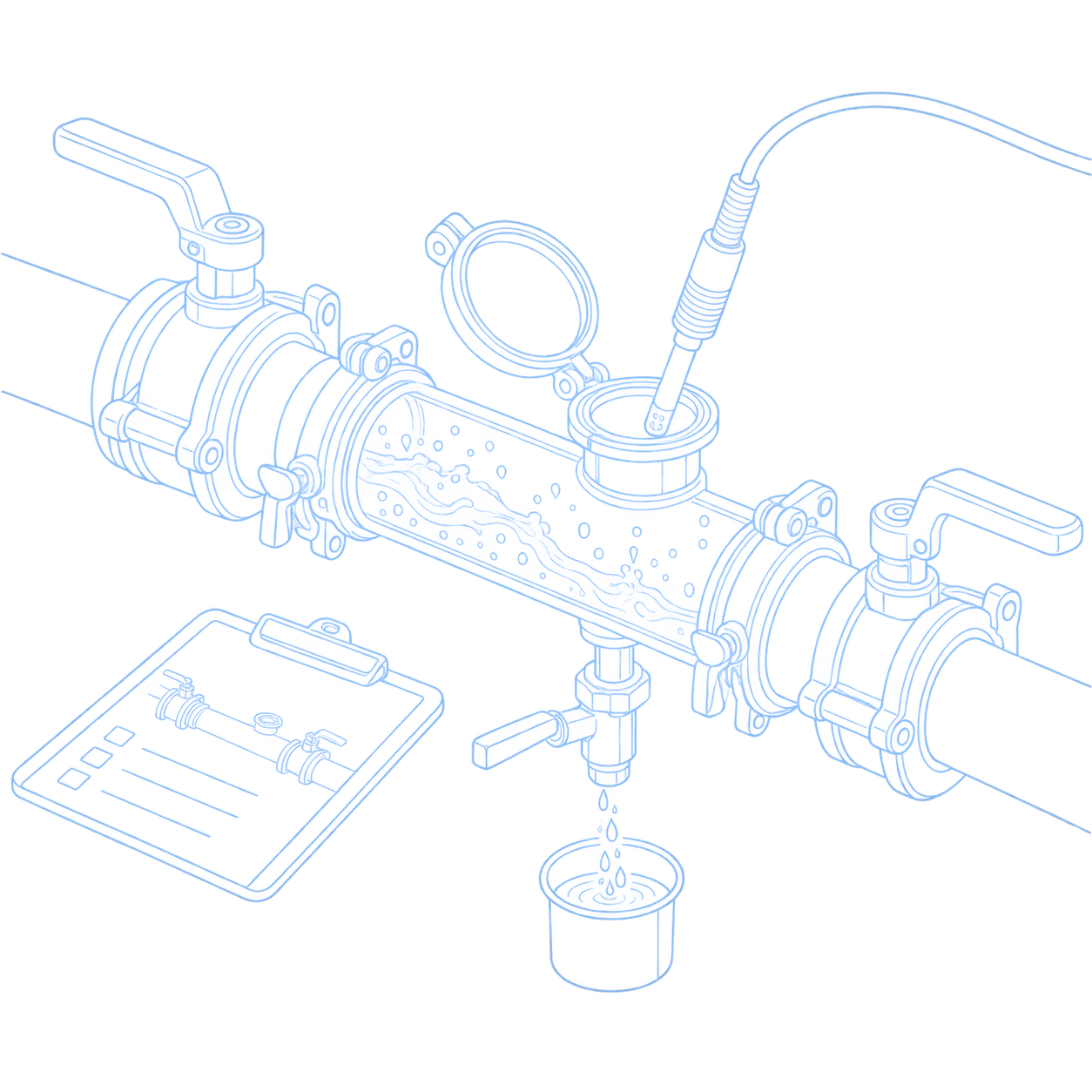
01
Define the line ID, product type, inspection objective, and known risk points. The line is isolated, drained, made safe for probe entry, and cleaned or rinsed where the aim is to evaluate surface condition after CIP.
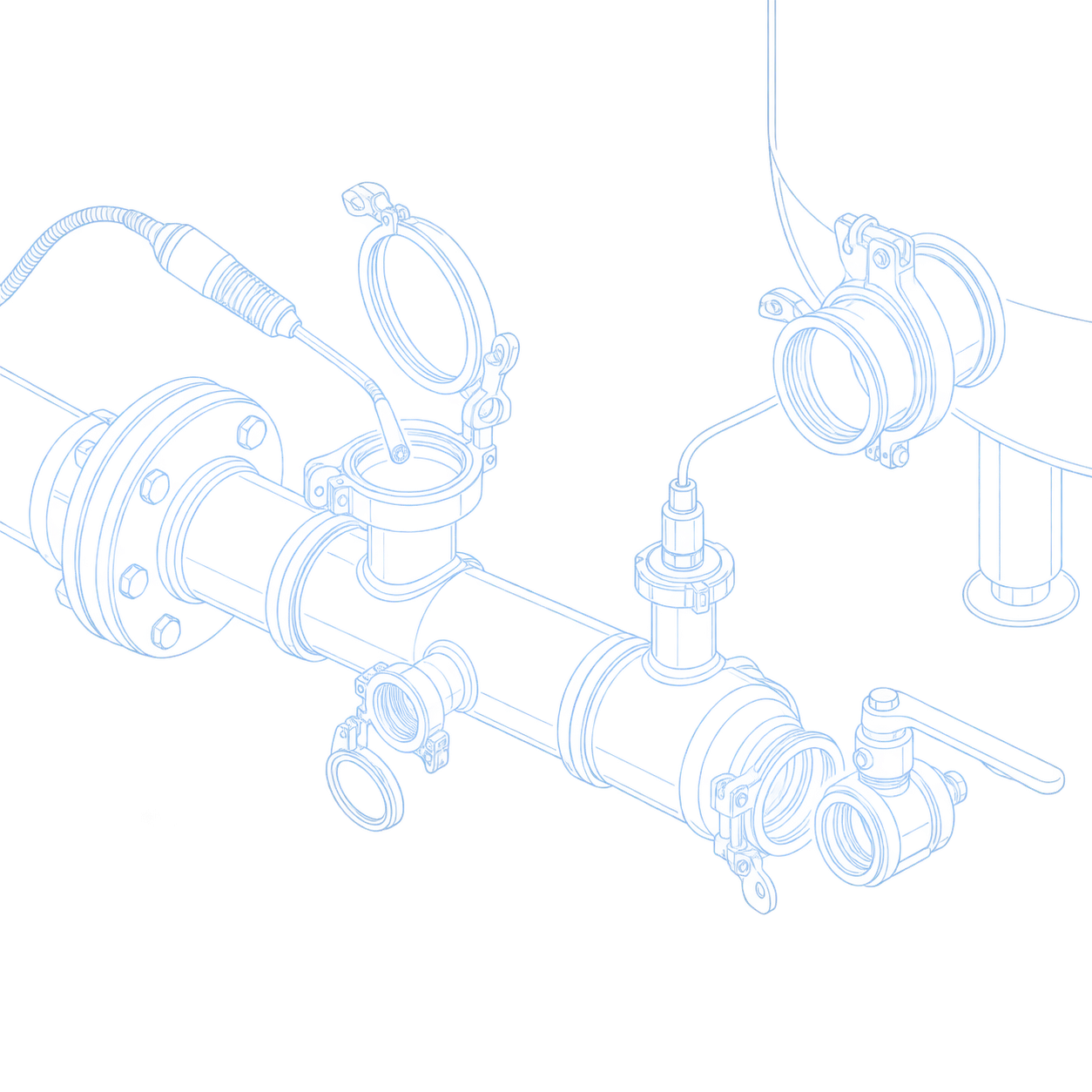
02
Select suitable entry points such as tri-clamp openings, removed valves, sample ports, sensor ports, or tank connections. Probe diameter, length, lighting, and viewing angle are selected for the pipe size and route.
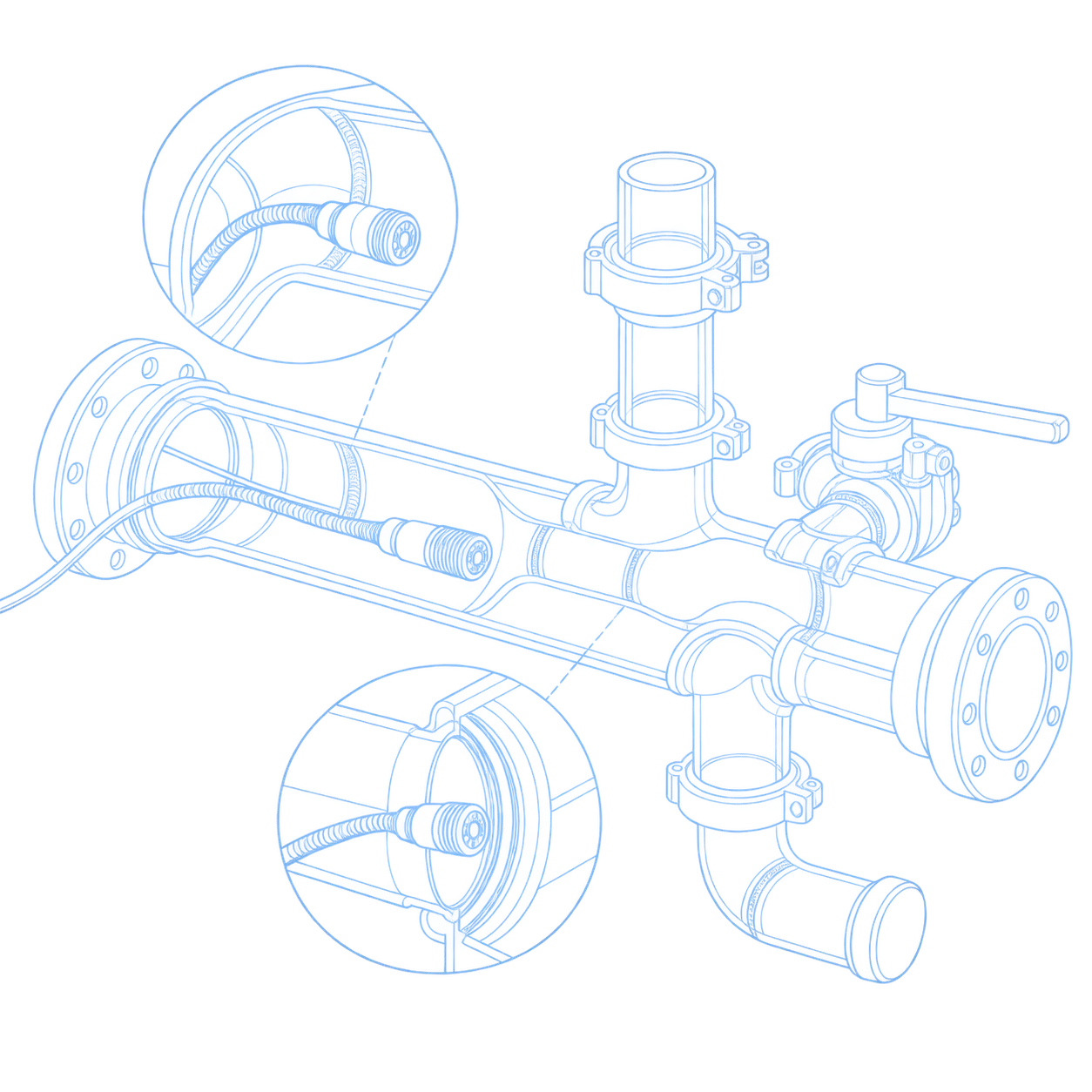
03
The probe is guided slowly through the pipeline, with particular attention to welds, bends, reducers, T-pieces, dead legs, valve clusters, gasket seats, and low-flow areas.
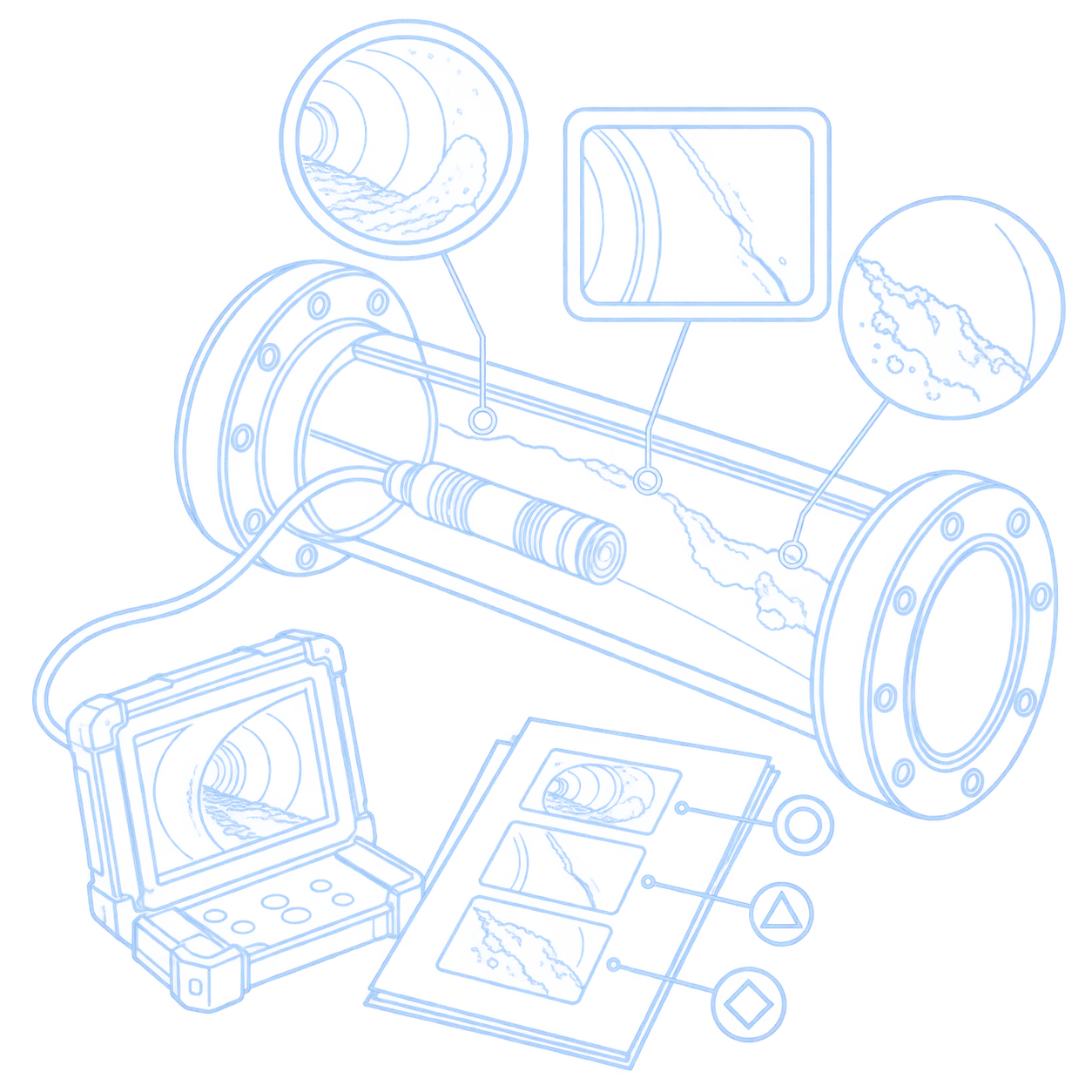
04
Each relevant finding is recorded and linked to the line section, inspection direction, distance from the access point, and risk level. Findings are classified as Critical, Major, or Minor according to hygienic impact.
04
The findings are consolidated into an inspection report with practical recommendations such as weld repair, polishing, gasket replacement, dead-leg removal, CIP review, or reinspection.
HOW THE SERVICE IS DELIVERED
A successful inspection requires more than inserting a camera into the pipeline. The service must define the correct inspection routes, prepare safe access, document the line systematically, and provide findings that quality, maintenance, and engineering teams can use.
01
Review line diagrams, pipe diameters, product type, access points, CIP program, microbiology history, and recent repairs.
02
Define priority routes, equipment boundaries, access requirements, and the available production window.
03
Inspect reachable internal surfaces and critical components using the selected probe and lighting configuration.
04
Discuss critical observations and any defects that may require immediate action before restart.
05
Issue the final report, define corrective actions, and arrange reinspection after repair where required.
WHAT YOU GET
The inspection provides a documented view of the internal condition of the selected piping routes. The final report helps QA, maintenance, production, and CAPA teams understand where defects are located, how they affect hygiene, and what should be corrected first.

MAP
PIC
CONF
REC
REPORT
STANDARDS IN USE
The inspection scope and reporting can support hygienic design, food-safety, and cleaning-verification programs based on the standards and guidance identified in the service description.
No 852/2004, Annex II, Chapter V
WHY CIP EXPERTS
01

We know CIP processes in detail and understand how hygiene issues develop in process equipment — and how to investigate them correctly.
02

We stay available before, during, and after the service to help the customer move from inspection findings to practical next steps.
03

We adapt the testing scope to the complexity of the project, the equipment involved, and the specific needs of each customer.
04

Every inspection ends with a clear, detailed report that shows the findings, highlights the problem areas, and outlines recommended actions.
FAQ
Does product piping inspection replace microbiological testing?
No. It is a visual hygienic inspection used to identify physical defects and contamination niches. Microbiological testing confirms product or environmental status, while videoscope inspection helps locate the physical root cause of recurring deviations.
When should product piping be inspected?
After installation, modification, welding repair, gasket or valve failure; before commissioning or audit; and whenever CIP or microbiological results remain unstable or unexplained.
Can the inspection identify every defect inside the line?
It can identify visible surface and assembly defects within the reachable inspection path. Subsurface defects or inaccessible zones may require pressure testing, penetrant testing, dismantling, or laboratory analysis.
Which findings require immediate action?
Cracks, open crevices, incomplete weld penetration, severe roughness, loose gasket fragments, corrosion, foreign bodies, product deposits, and dead-leg zones should be evaluated before production resumes.
What information is needed before the visit?
Line diagrams, pipe diameters, access points, product type, microbiology results, CIP program, repair history, and the available production window.
Related Pages
Explore complementary inspection, testing, and qualification services for a complete CIP validation scope.

Tell us about your equipment and production environment.
We will confirm scope, access requirements, and available dates within 1 business day.
Thank you for your request!
Our team will contact you soon to discuss your project and the next steps.
Request Sent
Thank you for contacting CIP Experts. Our manager will contact you within one business day.
