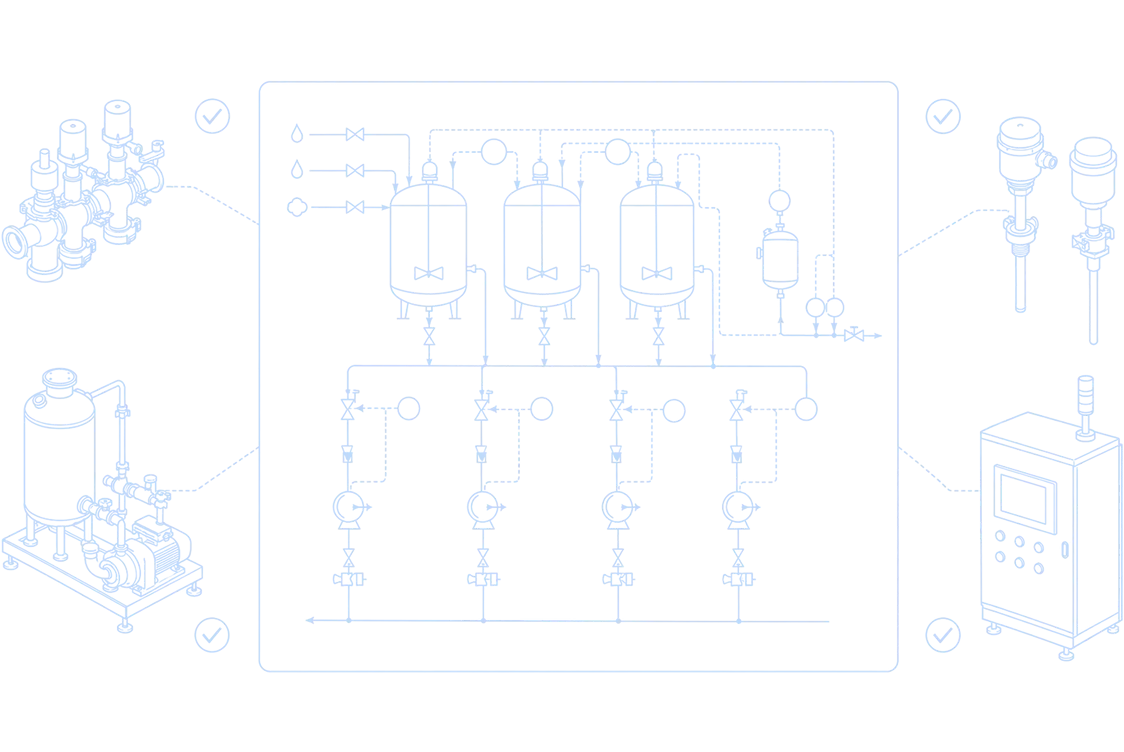
Create or update a coordinated Piping and Instrumentation Diagram for a new CIP station, an existing-system modernisation, or additional cleaning circuits. The P&ID defines equipment, piping, valves, instruments, utilities, control functions, and interfaces in one technical reference.

Defined equipment
scope
Clear line and valve
logic
Required instruments
documented
Supplier-ready
package
WHAT IS A CIP P&ID
Our P&ID development services translate the approved process concept into a detailed CIP piping and instrumentation diagram. The P&ID identifies the equipment, pipelines, valves, instruments, utilities, and automation interfaces required to prepare, supply, circulate, return, recover, and drain cleaning media. For existing systems, the scope can also include a P&ID update or as-built P&ID based on verified project information.
WHY P&ID MATTERS

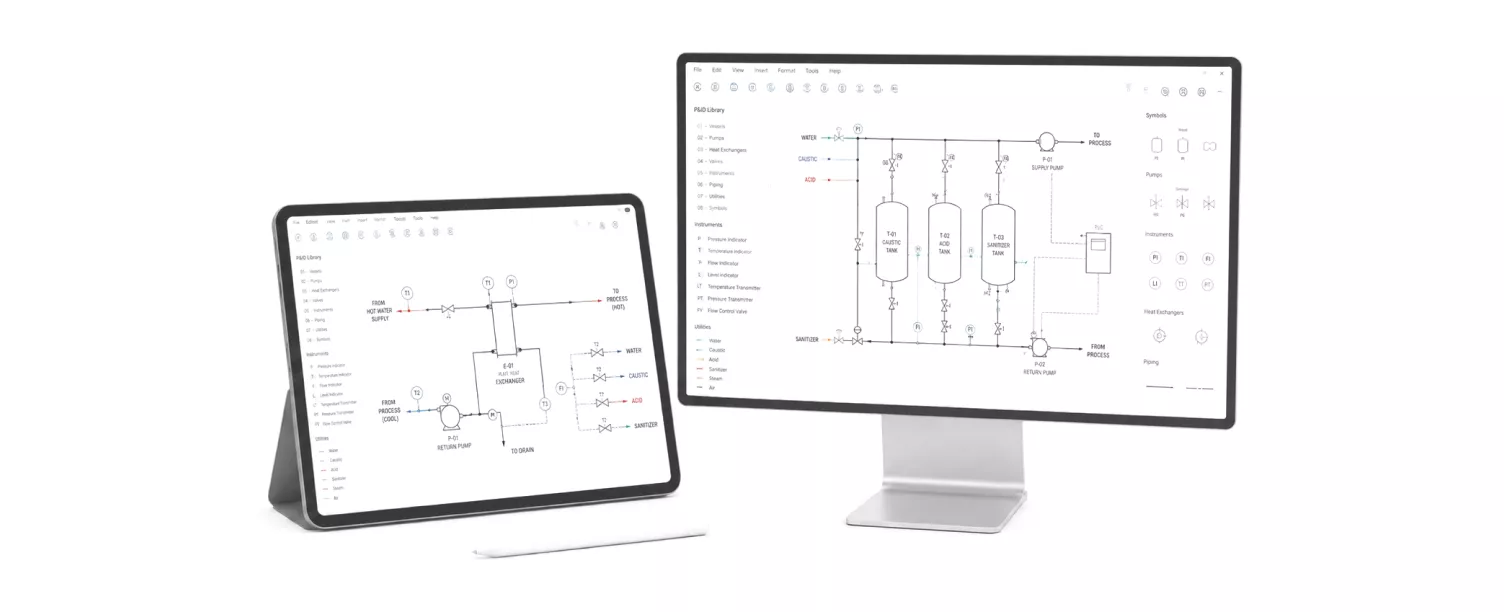
All CIP tanks, pumps, heat exchangers, dosing units, and washing objects are identified and referenced on one document.

Supply, return, recovery, drain, utility, and product lines are defined with their valve configurations.

Flow, temperature, conductivity, pressure, and level instruments are specified at the right locations.

System boundaries clarify what each supplier, contractor, and automation integrator is responsible for.

A reliable P&ID provides a shared reference for factory acceptance, site acceptance, and commissioning checks.

Changes are documented through revision history, keeping all parties aligned as the project develops.
WHEN THIS SERVICE IS NEEDED
The service applies whenever a CIP project requires a detailed technical diagram to define equipment, piping, valves, instruments, and control interfaces — for a new system or as an update to an existing one.
01
Develop the full P&ID from the approved PFD to define all equipment, lines, valves, and instruments.
02
Update an existing P&ID to reflect equipment changes, new circuits, or revised control requirements.
03
Extend the existing diagram to include new supply/return routes, additional valves, and updated system boundaries.
04
Revise equipment references, line configurations, and instrument positions
to match the new arrangement.
05
Document new measurement points, signal connections, and control interface requirements.
06
Create a reliable P&ID where none exists or where current drawings no longer reflect the installed system.
07
Provide a controlled technical reference for tendering, factory acceptance, and site commissioning.
P&ID CONTENT
Clean-in-place P&ID covers all layers of the system — from physical equipment and pipelines through to control signals and project boundaries. The content included depends on the project stage and agreed scope.
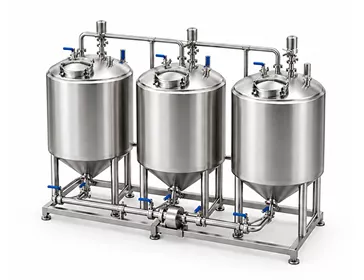
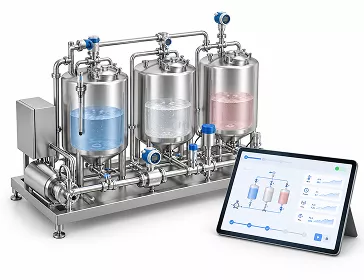
CIP tanks, pumps, heat exchangers, chemical dosing units, filter assemblies, and washing objects.
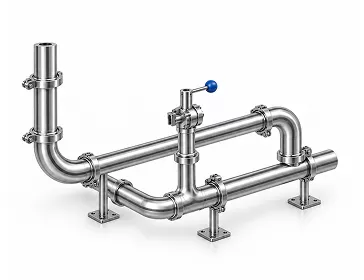
Supply, return, recovery, drain, product, and utility lines with agreed line class references.
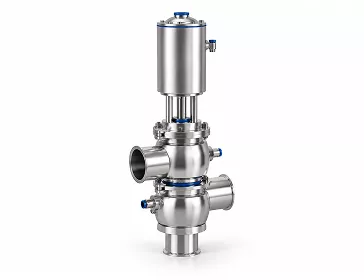
Shut-off, divert, mixproof, control, non-return, and manual valves with position and function.
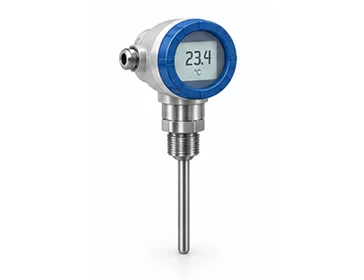
Flow, temperature, conductivity, pressure, level, concentration, and other measurements at defined locations.
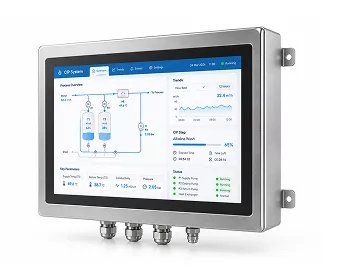
Control signals, interlocks, permissives, alarms, and functional connections to the automation system.
Interfaces between the client, station supplier, automation contractor, and process equipment.
TYPICAL SCOPE ITEMS
The diagram covers all engineered components from the CIP preparation equipment through to the washing objects and utility connections.
HOW THE P&ID IS DEVELOPED
01
Review the approved PFD, equipment list, layouts, utility data, control requirements, existing diagrams, and project standards.
02
Define equipment, lines, line classes, valves, instruments, washing objects, and system boundaries.
03
Create a new P&ID or update the existing diagram using the agreed tagging and CAD standards.
04
Check process logic, cleanability, drainability, measurements, accessibility, and automation interfaces.
05
Resolve comments and issue the approved revision in PDF and agreed editable format.
TECHNICAL REVIEW

Correct sequence and direction of cleaning media through the station and into each washing object.
Mixproof, cross-contamination, and circuit-isolation requirements are addressed in the valve and line configuration.
Instruments are placed where they are needed for process control, monitoring, and automation.
Valve types, actuator arrangements, and defined fail positions are checked where safety or process requirements apply.
Line slopes, low-point drains, and dead-leg risks are reviewed for hygienic design compliance.
Dosing injection points, heat exchanger connections, and temperature-control interfaces are technically verified.
CIP supply, return, and interlock interfaces with washing objects are defined and consistent with the process design.
Signals, interlocks, alarms, and control functions required by the automation system are captured on the diagram.
Interfaces between the client, station supplier, automation contractor, and process equipment are clearly defined.
WHAT YOU GET
The P&ID package gives engineering, procurement, automation, and operations teams a single controlled reference for the CIP system. Note: The P&ID is only as reliable as the confirmed design basis. Unknown equipment data, incomplete process decisions, undocumented existing connections, or undefined control requirements must be recorded as assumptions or open points. Site verification, 3D scanning, additional calculations, or supplier data may be required before the final issue.

PID
EI
IR
UI
REC
OP
NEXT ENGINEERING STEP
The P&ID works as part of a coordinated engineering package. These services provide the input or complementary deliverables most commonly developed alongside the P&ID.
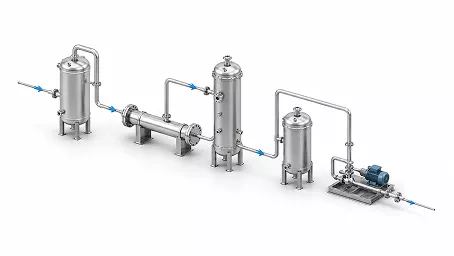
Defines the process concept, flow logic, and equipment list that the P&ID is built on
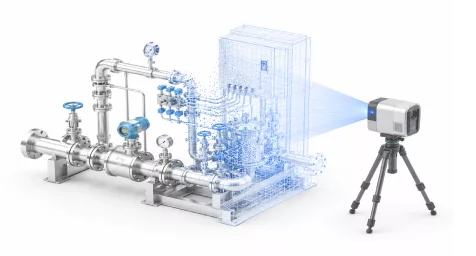
Confirms existing geometry and tie-in positions before equipment and line definitions are finalized
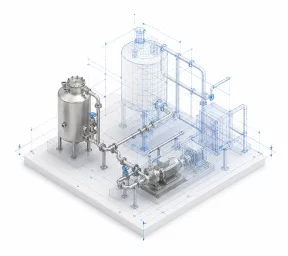
Coordinates spatial placement of equipment and pipelines with the process logic defined in the P&ID
WHY CIP EXPERTS
01

We know how supply, return, heating, dosing, recovery, rinsing, and washing-object interfaces must work together on the diagram.
02

We consider cleanability, drainability, dead-leg risks, and appropriate instrument placement in every diagram review.
03

The diagram supports control signals, functional interfaces, alarms, reporting, and integration with the automation system.
04

The result is prepared for supplier discussions, implementation, FAT/SAT, commissioning, and future operational reference.
FAQ
Can you update an existing P&ID?
Yes. We can review, mark up, correct, and reissue existing diagrams according to the agreed scope.
Can you create a P&ID without an existing PFD?
It is possible when the process concept is already sufficiently defined. Otherwise, PFD development should precede the P&ID.
Does the P&ID include automation logic?
It shows instruments, signals, and functional interfaces. Full functional descriptions, software design, or PLC programming are separate deliverables unless included.
Can the P&ID be used for tendering?
Yes. It helps define supplier scope and makes technical proposals more comparable.
Related Pages
Know exactly what happened in every cleaning cycle — temperature, flow, conductivity, and timing — for every zone in your dairy plant.

Request P&ID development or send us your current PFDs, P&IDs, equipment list, layouts, and project objective. We will confirm the required review and development scope.
Thank you for your request!
Our team will contact you soon to discuss your project and the next steps.
Request Sent
Thank you for contacting CIP Experts. Our manager will contact you within one business day.
