Documented DQ, IQ, OQ, and PQ qualification proving that process equipment, CIP systems, utilities, and automation are designed correctly, installed as approved, operate reliably, and consistently achieve their intended performance.

WHAT IS EQUIPMENT QUALIFICATION
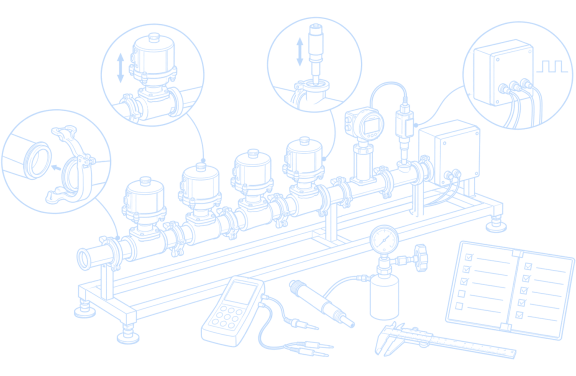
Equipment Qualification is a multi-stage DQ, IQ, OQ, and PQ process used to confirm that manufacturing equipment, utilities, automation, and engineering systems are fit for their intended use. For CIP equipment qualification, the scope can include the station, pipelines, instruments, utilities, automation, and operating functions. The agreed checks, acceptance criteria, deviations, and evidence are documented in a CIP qualification protocol.
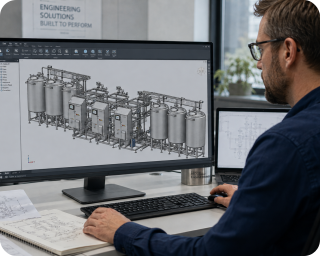
The qualification process can cover the full DQ–PQ lifecycle or selected stages depending on the equipment status, project phase, available documentation, and qualification objective.
Note: Qualification confirms that equipment, utilities, and systems are suitable and controllable. CIP Validation confirms that the process or method performed on qualified equipment consistently achieves the required result.
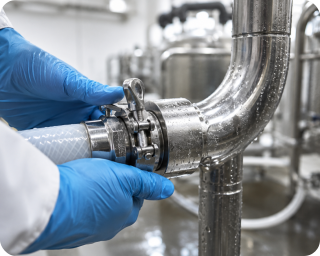
For CIP systems, EQ verifies the station, pipelines, instruments, automation, and operating capability — cleaning validation and laboratory testing provide additional evidence of process performance.
WHY EQUIPMENT QUALIFICATION MATTERS
WHEN THIS SERVICE IS NEEDED
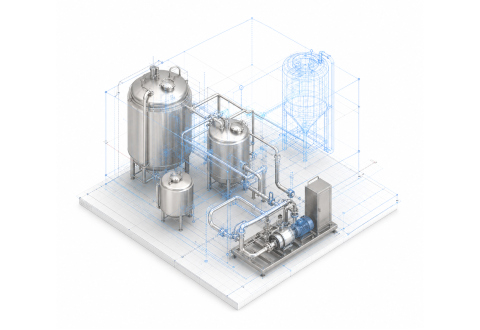
Equipment Qualification is required whenever a plant needs documented evidence that new, modified, relocated, or existing equipment is suitable for its intended purpose. It is also relevant when documentation gaps, recurring hygiene deviations, or supplier-handover risks make the equipment status uncertain.
01
Before commercial production begins on a new line, machine, CIP station, tank, filler, pasteuriser, or utility system.
02
After equipment relocation, major modification, automation upgrade, product-contact component replacement, or new system integration.
03
When URS, P&ID, layouts, drawings, certificates, or as-built documentation are missing, outdated, or inconsistent.
04
After a failed audit, customer complaint, repeated ATP or swab failure, microbiological contamination, or other critical deviation.
05
Before FAT/SAT acceptance, operational handover, final supplier approval, or payment milestone.
06
According to an approved schedule, risk assessment, change-control decision, audit requirement, or customer specification.
DEVIATIONS WE IDENTIFY
Qualification compares the approved requirements with the actual equipment, installation, operation, and performance. Findings are recorded with evidence, exact equipment tags or locations, severity, potential impact, and recommended corrective actions.
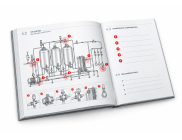
Differences between the proposed design and approved URS, GMP, EHEDG, EN ISO, hygienic-design, or internal requirements.
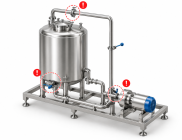
Differences between the installed system and the approved P&ID, layout, drawings, specifications, or equipment lists.
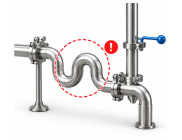
Incorrect equipment, piping, valves, instruments, utility connections, slopes, flow directions, or hygienic installation details.

Missing certificates, calibration records, manuals, FAT/SAT evidence, approvals, or component traceability.
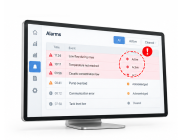
Incorrect valve or pump operation, alarms, interlocks, recipes, sequences, permissions, or control responses.
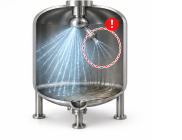
Insufficient time, temperature, flow, detergent concentration, conductivity, rinse quality, or failed ATP, swab, and rinse-water results.
WHAT WE QUALIFY
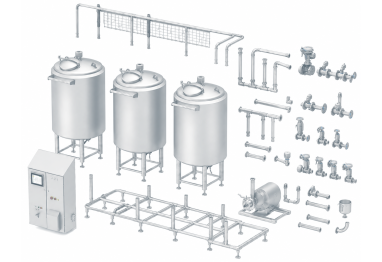
Equipment Qualification can be applied to individual machines, complete production systems, CIP installations, and supporting engineering utilities. The exact qualification boundary and matrix are defined before protocol preparation.
DQ · IQ · OQ · PQ
Four Stages of Equipment Qualification
The qualification lifecycle moves from verifying the proposed design to confirming the installed system, testing its operation, and demonstrating consistent performance under actual or representative production conditions.
HOW THE SERVICE IS PERFORMED
01
Collect URS, P&IDs, layouts, specifications, supplier manuals, FAT/SAT records, certificates, calibration records, CIP recipes, alarm lists, and previous deviation reports.
02
Define qualification boundaries and map equipment tags, instruments, utilities, critical process points, sampling points, and test routes.
03
Prepare or update the DQ, IQ, OQ, and PQ protocols, checklists, risk-based test points, and pass/fail criteria for client approval.
04
Perform document checks, visual inspection, mechanical-completion verification, functional testing, recipe and sequence checks, and process or CIP performance tests.
05
Record every deviation by tag or location, category, evidence, hygienic or operational impact, severity, and recommended corrective action.
06
Issue the qualification report, review findings with the client, and agree restrictions, corrective actions, retesting, and requalification requirements.
WHAT YOU GET
The client receives a controlled qualification package documenting the object, approved scope, completed activities, results, deviations, corrective actions, and final readiness conclusion. Before qualification starts, the following inputs are required: URS, PFD and P&ID, equipment layouts and approved drawings, equipment and instrument lists, supplier manuals and technical specifications, material and component certificates, calibration records, FAT/SAT documentation, CIP programs and process recipes, alarm and interlock lists, and previous deviations and change-control records.

SM
Equipment or system boundaries, tag list, critical points, test scope, and qualification matrix
RE
Pass/fail status against approved acceptance criteria with photos, records, measurements, and signatures
DR
Description, exact equipment tag or location, evidence, severity, probable cause, and potential impact
CR
Prioritised actions for correction, document completion, repair, adjustment, or further investigation
RP
Required repeat tests, affected qualification stages, timing, and conditions for closure
RC
Final statement confirming equipment status,
open restrictions, and readiness or non-readiness
for production
REQUIREMENTS IN USE
The qualification basis is defined according to the customer’s URS, internal standards, equipment purpose, market, and applicable compliance framework. The exact standards applied depend on the project, equipment type, and regulatory scope.
FDA 21 CFR
EU GMP Annex 15
EN ISO Standards
EHEDG Standards
EHEDG Guidelines
3A Requirements
Approved URS
Internal engineering, quality & validation procedures
WHY CIP EXPERTS
01

We understand how equipment design, instrumentation, utilities, automation, and cleaning performance affect product safety and reliable operation.
02

Document review, hygienic assessment, functional testing, process verification, and CAPA planning are coordinated within one qualification scope.
03

Qualification tests and acceptance criteria are adapted to the equipment, intended use, criticality, and project stage — not applied as a generic checklist.
04

The final report prioritises corrective actions, retesting requirements, and the path to qualification closure — not just a list of deviations.
FAQ
What is Equipment Qualification?
It is a documented process proving that equipment, a utility, or a system is suitable for its intended use and consistently performs according to the approved requirements and applicable compliance framework.
What is the difference between qualification and validation?
Qualification applies to equipment, utilities, and systems. Validation applies to processes and methods performed using qualified equipment.
Does EQ replace cleaning validation or microbiological testing?
No. EQ proves that the equipment and system are suitable and controllable. Cleaning validation, ATP, swabs, rinse-water tests, and microbiological methods provide evidence of process cleanliness and performance.
Is it necessary to perform all four stages?
Not always. The required DQ, IQ, OQ, and PQ scope depends on the project stage, equipment history, change type, available records, risk assessment, and qualification objective.
What information is required before the visit?
URS, P&IDs, layouts, equipment lists, manuals, certificates, calibration records, FAT/SAT files, CIP programs, previous deviations, and the available production window.
Related Pages
Explore complementary inspection, testing, and qualification services for a complete CIP validation scope.

Tell us about your equipment and production environment.
We will confirm scope, access requirements, and available dates within 1 business day.
Thank you for your request!
Our team will contact you soon to discuss your project and the next steps.
Request Sent
Thank you for contacting CIP Experts. Our manager will contact you within one business day.
